Synthesis Literature of City Marketing and Similar Concepts

Table of contents

1. Introduction

he city marketing is an area that has been practiced since the 19 th century (Kavaratzis, 2004), however it's a discipline that has a huge lack of academic researches. Its origin stem from social and nonprofit marketing (Kotler & Levy 1969;Koter & Zaltman, 1971) and it has been practiced for many centuries for the development and promotion of places, cities, and nations (Kavaratzis & Ashwoth, 2008).

Throughout the time, the terminology has been developed, and many concepts were introduced to vary the understanding. Therefore the field progressed from the initial "place selling" approach to the use of integrated marketing and branding techniques (Ashworth & Voodg, 1990, 1994;Kotler et al. 1993Kotler et al. , 1999; van den berg & Braun, 1999;Rainisto, 2003;Gertner, 2011).

Usually, when we talk about city marketing or any of the similar concepts, we extend our understanding to the urban areas: those maybe cities, town, regions, territories.

Along this article, we will see the literature reviews of those concepts in the aim to understand from where it comes and where are we going.

2. II.

3. Literature Review of the Concept

City marketing is a field that mixes between a multiple disciplines. This interdisciplinary nature led to confusion between the academics and the practitioners.

However, the concept has developed and left some cities wondering on how cities as a brand could be designed and managed (Marrilees et al, 2012).

The aim of these concepts is to increase the investment and tourism by development the community by reinforcing local identity and activating social forces (Kavaratzis, 2007).

The interest of the field, globally, is to improve the competitive image of deprived places can help to the development of an empirical framework which can make a significant step towards theory making (Niedomysl & Jonasson, 2012).

City marketing is a complex field which gathers a multiple academic disciplines: geography, urban planning, economic development, tourism, etc (Berglund & Olsson, 2010). This mixture of all the discipline doesn't let a clear understand of the concept (Niedomysl & Jonasson, 2012).

The same confusion is there, when we talk about specific journals for publication: place marketing can be interchangeable to "place branding", "urban marketing", "city marketing", "territorial marketing" and vice versa (Skinner, 2008).

Even though, cities use branding as an instrument to define themselves and achieve attractive positions and positive perceptions of the mind of key audiences (Kavaratzis & Ashworth, 2009).

Often, city marketing is defined as a management process (Kolter et al, 1999;Rainisto, 2003) which encompasses the attempts of the place differentiation for competitive advantage over other places. City branding has been defined as the "purpose symbolic embodiment of all information connected to a city in order to create association around it" (Lucarelli & Berg, 2011).

One wide world reason is that cities in all over the planet engage themselves in marketing and branding efforts, in order to stay competitive and relevant on the global market .

Another definition of the place marketing concept can be used, which says: "the measures taken, by actors appointed to govern a place, to improve the competitive image of that place with explicit aim of attracting capital from elsewhere" (Niedomysl & Jonasson, 2012).

The marketing of urban places are practiced since the 19 th century (Kavaratzis, 2004). There is a need to identify the real history of all those concepts, in order a) Meta-analisis

The real stage where the city marketing occurs now is still in the very beginning level, due to the number of researches that were done in this area. Despite this, the reality says something else: the biggest cities in the world began to interest, and even to practice some theories about the field, such as, territorial communication, encouraging some activities to take place: (Investments, Olympic sports, cultural events?), in order to be known on a national and an international level. Hence, an increasing number of cities and regions around the world began to establish some logos and brands for their cities: 'I Love New York'; 'I Am Amsterdam'; 'Be Brussels'; 'Be Berlin'; cOPENhagen (Open for you)'; 'Lond-On';? however these decision have been taken from 1977, therefore, the city marketing appeared as a field and area. Although, the academic researchers are not well completed and full in this area, and even the cities find they practicing some of the key.

City branding has been defined as the 'purposeful symbolic embodiment of all information connected to a city in order to create associations around it' (Lucarelli & Berg, 2011, p. 21). It can be used as a strategic tool to provide cities with a source of economic, political and cultural value (Kavaratzis, In other words, cities use branding as an instrument to define themselves and achieve attractive positions and positive perceptions in the minds of key audiences (Kavaratzis & Ashworth, 2009).

This article then presents as originality: the history of city marketing through the JCR impact journals and try to give a summary to this area and relatively young and new field that begins to grow and the receive importance to metropolises , major cities in the country that developed countries, and to developing countries.

4. III.

5. Research Methodology

The field of city marketing and similar concepts has known a very important stage of advancements and contribution from a lot of articles and researches that was done by different authors from different part of the world. Today, in this article, we are going to analyze the different articles that talk about city marketing or similar concepts, published in JCR journals of impact. Exploring this research will give us some answers in order to know the history of the concept city marketing academically through the articles published in JCR journals.

Place marketing's validity as an academic field of knowledge is under threat (Gertner, 2011).

6. a) Contribution to knowledge

City marketing and similar concepts that are the focus of this study is a new field that is underresearched topic. The aim of this study is to help to understand the history and the beginning of this concept and where we are now in front of this study.

7. Year of publication

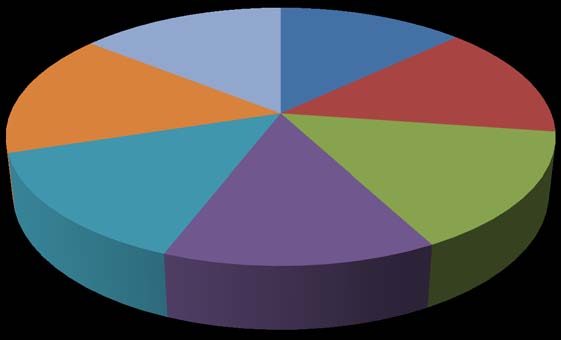
According to the statistics that we have realized, we notice that the beginning of the research of place marketing and similar concepts began in 1993, under the Journal Citations Reports in social sciences of 2015. The first journals published some articles and papers about city marketing with 2%, this proportion was growing up till reaching 18% in 2015.

Through the years, we have seen that the peaks of the publications in the Journal Citation Reports are: 1999 with 5%, 2007 with 7%, 2010, has been increasing till 11%, and 16% in 2013, and then stagnated in 18% in 2015.

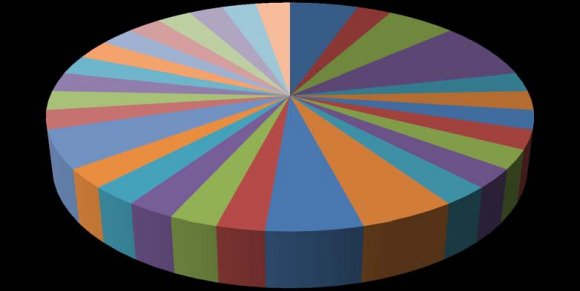
According to the research that we've done, we can forward that the case study that was chosen in the majority of the papers was Beijing with 8%.

In second place, there were many cities that were chosen in the empiric part of the articles such as: Hong Kong, Turin, Shanghai, Berlin, and Rio de Janeiro. This means that the majority of the papers choose the city of Beijing, its role in the world, as a strong city that found the right way to make it know with City marketing and similar concepts in order to be good economically and touristically.

8. Case study by Countries

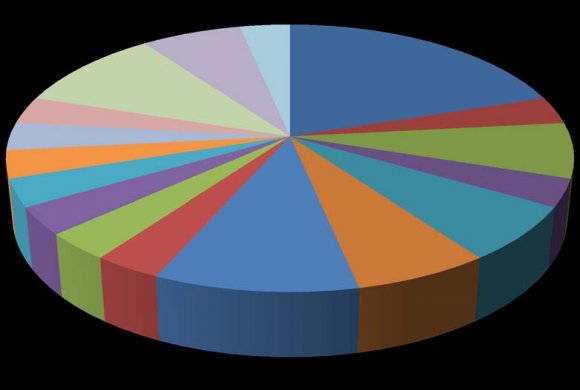
Concerning the countries of the case study of the articles that we've studied, we can say that the majority of the articles were talking about different cities in the same country which concludes that, China is on the top of the list with 20% then Germany and Australia with 10%, and then Italy, UK and South Korea with 7%.

As we have seen, China is one of the most important countries found at the empiric part of the papers that we have studied, in the second place we find Germany, as a strong country in different areas and especially.

9. Place marketing 36%

City marketing 20%

10. Keywords

From all the research that was done from 1993 till 2015, the keyword very used is "Place marketing" with 36%, then we find City branding with 24%, and then 20% dedicated to "City marketing".

The main useful keyword is Place marketing referring to the place that has know a strategy of marketing in order to have a better future, than the city branding, referring to the importance of the brand in a city or a territory that makes it easier for the tourists and visitors to remember it, and the city marketing, that is referring to the marketing used to the cities. The authors that wrote the articles from 1993 till 2015 about city marketing and similar concepts are from: UK with 9%, then USA with 6%, 5% is common between China and Australia,, then we find Italy with 4%, and finally, Germany and Netherlands with 3%.

V.

11. Conclusion

This study has explored the articles that were published in JCR journals and revues. In this sense, the articles published between 1996 ans 2015 were analyzed, even tough, the study is not definitive. It only helps to summarize and interpret, analyzing the item that was choosen in this work.

The main result that we have noticed is that, the cities that are discussed at the study empirical part has to do with two continents: in one hand, Asia, in order words China because most of the articles talk about Beijing, Shanghai, Hong Kong, China's cities. In other hand, the articles talk about a very strong country in Europe which is Germany: Berlin, Munich, Hamburg. The city branding is definied as a demand oriented approach. (Oguztimur, Akturan, 2015).

The city marketing, literature is under construction and development. Most of the studies are derived from marketing and management (Kavaratzis, 2004(Kavaratzis, , 2007) ) and brand management (Kavaratzis & Ashworth, 2009). Therefore, excluded the articles that were published elsewhere, and the books that are talking about the same fields, conferences proceeding, articles that are not available electronically.

The city marketing field and its similar concepts needs a considerable research contributed b practionners. Through the entire article, the study has explored different articles mostly in English that was published in many revues of impact: "JCR" that talked This study has some limitations. The main limitation of this article is that, the study explored the literature just from JCR journals from Urban Studies Area and the research was done with these keywords: Place Marketing, City Marketing, City Branding, Place Branding, Branding cities, Marketing places, Place promotion, Urban branding. about city marketing, city branding, place marketing, territorial marketing.

This study leads to analyze and interpret all the results that were shown in order to summarize the real history of this field that was shown and published academically.

The study has shown that, the earliest article about these keywords was academically published in 1996.

The study analyzes the articles per years, revues, the university and the case study "place".
Figure 1.
Figure 2.
Figure 3.
Figure 4.
Figure 5. Table 1 :
1
This study examines the perceived satisfaction of foreign visitors who have visited at least one Korean metropolitan city through a questionnaire survey and suggests some policies for making a city more attractive Examining the relationship between hallmark events and three characteristics of the post-modern city: the importance of marketing places.
Dong-A University South Korea University of Wollongong Australia
Busan city South Korea Sydney Australia Still Bay South Africa
1.355 0.909
International visitors satisfaction with Pusan city and its implications for city marketing Playing Games with Sydney: Marketing Sydney for the 2000 Olympics Place marketing, tourism promotion and community based local economic development in post-apartheid South Africa The Case of Still Bay-The "Bay of Sleeping Beauty"
Hai Sik Sohn & Cheol Park Etienne Nel ; Tony Binns
Urban geography Urban studies Journal of urban affairs
1999 2002
Place marketing Place marketing
1
2
3

Appendix A

Appendix A.1 Journal of publication

From 1993 till 2015, there was several and various publications that was done in many journals, and the most common in publications of the papers according to place marketing and city branding field, we can say that the "Urban Studies" with 13%, then "Journal of Planning Literature" with 18%, and finally 33% with the journal: "Cities".

This means that impact factor of the journals of publication has a great and a very important role at the acceptance of the papers of quality.

Appendix B

  1. City branding: a state-of-the-art review of the research domain. A Lucarelli , P Berg . Journal of place management and development 2011. 4 (1) p. .
  2. Destruction or construction? A (counter) branding analysis of sport mega-events in Rio de Janeiro. A Maiello , C Pasquinelli . Cities 2015. 48 p. .
  3. Destruction or construction? A (counter) branding analysis of sport mega-events in Rio de Janeiro. A Maiello , C Pasquinelli . Cities 2015. 48 p. .
  4. The image of the creative city: Some reflections on urban branding in Turin. A Vanolo . Cities 2008. 25 (6) p. .
  5. The image of the creative city: Some reflections on urban branding in Turin. A Vanolo . Cities 2008. 25 (6) p. .
  6. The image of the creative city, eight years later: Turin, urban branding and the economic crisis taboo. A Vanolo . Cities 2015. 46 p. .
  7. The image of the creative city, eight years later: Turin, urban branding and the economic crisis taboo. A Vanolo . Cities 2015. 46 p. .
  8. City Branding as a Response to Global Intercity Competition. A V Anttiroiko . Growth and Change 2014.
  9. Tourism marketing images of industrial cities. B Bramwell , L Rawding . Annals of Tourism research 1996. 23 (1) p. .
  10. Tourism marketing images of industrial cities. B Bramwell , L Rawding . Annals of Tourism research 1996. 23 (1) p. .
  11. City make-overs: The place marketing of melbourne during the kennett years, 1992-99. B Engels . Urban Policy and Research 2000. 18 (4) p. .
  12. Multiple stakeholders and multiple city brand meanings. B Merrilees , D Miller , C Herington . European Journal of Marketing 2012. 46 (7/8) p. .
  13. City marketing: a multiattribute approach. B Van Limburg . Tourism management 1998. 19 (5) p. .
  14. Key success factors in city marketing-some empirical evidence, C Bornemeyer , R Decker . 2003. Berlin Heidelberg: Springer. p. .
  15. Pushing the urban frontier: temporary uses of space, city marketing, and the creative city discourse in 2000s Berlin. C Colomb . Journal of urban affairs 2012. 34 (2) p. .
  16. Pushing the urban frontier: temporary uses of space, city marketing, and the creative city discourse in 2000s Berlin. C Colomb . Journal of urban affairs 2012. 34 (2) p. .
  17. C Dinardi . Cities for sale: Contesting city branding and cultural policies in Buenos Aires. Urban Studies, 2015. p. 0042098015604079.
  18. Improving competitiveness through city marketing in Spanish hotels. Cegarra Navarro , J G Martinez-Martinez , A . The Service Industries Journal 2011. 31 (9) p. .
  19. Place promotion and symbolic characterization of new Songdo City. C Kim . Cities 2010. South Korea. 27 (1) p. .
  20. Place promotion and symbolic characterization of new Songdo City. C Kim . Cities 2010. South Korea. 27 (1) p. .
  21. Marketing the Chinese dream home: gated communities and representations of the good life in (post-) socialist Shanghai. C P Pow , L Kong . Urban Geography 2007. 28 (2) p. .
  22. Renewing a historical legacy: Tourism, leisure shopping and urban branding in Paris. C Rabbiosi . Cities 2015. 42 p. .
  23. Renewing a historical legacy: Tourism, leisure shopping and urban branding in Paris. C Rabbiosi . Cities 2015. 42 p. .
  24. Public parks in city branding: Perceptions of visitors vis-à-vis residents in Hong Kong. C S Chan , M Peters , L M Marafa . Urban Forestry & Urban Greening 2015. 14 (4) p. .
  25. But we also have watercolors, acrylics & pastels": Media strategies for marketing small cities and towns in Texas. E Avraham , D Daugherty . Cities 2009. 26 (6) p. . (We're known for oil)
  26. But we also have watercolors, acrylics & pastels": Media strategies for marketing small cities and towns in Texas. E Avraham , D Daugherty . Cities 2009. 26 (6) p. . (We're known for oil)
  27. Rethinking place marketing-a literature review. E Berglund , K Olsson . Proceedings of the European Congress of the Regional Science Association, (the European Congress of the Regional Science Association) 2010. August. 50.
  28. The effectiveness of place brand communication. E Braun , J Eshuis , E H Klijn . Cities 2014. 41 p. .
  29. The effectiveness of place brand communication. E Braun , J Eshuis , E H Klijn . Cities 2014. 41 p. .
  30. Place Marketing, Tourism Promotion, and Community based Local Economic Development in Post-Apartheid South Africa The Case of Still Bay-The "Bay of Sleeping Beauty. E Nel , T Binns . Urban Affairs Review 2002. 38 (2) p. .
  31. Metodología para la investigación en marketing y dirección de empresas, F J S Sánchez . 1999.
  32. Gated and packaged suburbia: Packaging and branding Chinese suburban residential development. F Wu . Cities 2010. 27 (5) p. .
  33. Gated and packaged suburbia: Packaging and branding Chinese suburban residential development. F Wu . Cities 2010. 27 (5) p. .
  34. Beyond the logo: Brand management for cities. G Ashworth , M Kavaratzis . Journal of Brand Management 2009. 16 (8) p. .
  35. Selling the city: marketing approaches in public sector urban planning, G J Ashworth , H Voogd . 1990. Belhaven Press.
  36. Marketing and place promotion. Place promotion: the use of publicity and marketing to sell towns and regions, G J Ashworth , H Voogd . 1994. p. .
  37. Creative cities in Europe. G J Hospers . Intereconomics 2003. 38 (5) p. .
  38. Lynch, Urry and city marketing: Taking advantage of the city as a built and graphic image, G J Hospers . 2009. Place Branding and Public Diplomacy. 5 p. .
  39. Lynch's The Image of the City after 50 Years: City Marketing Lessons from an Urban Planning Classic, G J Hospers . 2010.
  40. Lynch's The Image of the City after 50 Years: City Marketing Lessons from an Urban Planning Classic, G J Hospers . 2010.
  41. Making sense of place: from cold to warm city marketing. G J Hospers . Journal of Place Management and Development 2010. 3 (3) p. .
  42. A rhetorical study of in-flight real estate advertisements as a potential site of ethical transformation in Chinese cities. G Lawson . Cities 2013. 31 p. .
  43. A rhetorical study of in-flight real estate advertisements as a potential site of ethical transformation in Chinese cities. G Lawson . Cities 2013. 31 p. .
  44. What about the 'place 'in place marketing. G Medway , D . Marketing Theory, 2013. 13 p. .
  45. Playing games with Sydney: marketing Sydney for the. G Waitt . Olympics. Urban Studies 1999. 2000. 36 (7) p. .
  46. Towards a service-dominant place marketing logic. Marketing Theory, G Warnaby . 2009. 9 p. .
  47. Understanding cities through city brands: City branding as a social and semantic network. H E Sevin . Cities 2014. 38 p. .
  48. Cultural urban branding and creative cities: A theoretical framework for promoting creativity in the public spaces. H Okano , D Samson . Cities 2010. 27 p. .
  49. Cultural urban branding and creative cities: A theoretical framework for promoting creativity in the public spaces. H Okano , D Samson . Cities 2010. 27 p. .
  50. The emergence and development of place marketing's confused identity. H Skinner . Journal of marketing management 2008. 24 (9) p. .
  51. International visitors' satisfaction with Pusan city and its implications for city marketing. H S Sohn , C Park . Asia Pacific Journal of Tourism Research 1999. 4 (1) p. .
  52. Place marketing as governance strategy: An assessment of obstacles in place marketing and their effects on attracting target groups. J Eshuis , E Braun , E H Klijn . Public Administration Review 2013. 73 (3) p. .
  53. Place marketing as governance strategy: An assessment of obstacles in place marketing and their effects on attracting target groups. J Eshuis , E Braun , E H Klijn . Public Administration Review 2013. 73 (3) p. .
  54. Place marketing and citizen participation: branding as strategy to address the emotional dimension of policy making. J Eshuis , E H Klijn , E Braun . International Review of Administrative Sciences 2014. 80 (1) p. .
  55. Identifying the role of cognitive, affective, and behavioral components in understanding residents' attitudes toward place marketing. J Kwon , C A Vogt . Journal of Travel Research 2010. 49 (4) p. .
  56. Struggling for the right to the (creative) city in Berlin and Hamburg: new urban social movements, new 'spaces of hope'?. J Novy , C Colomb . International Journal of Urban and Regional Research 2013. 37 (5) p. .
  57. Study on the Mechanism of Value Increment During City Marketing. J P Dong , Y L Ding . The 19th International Conference on Industrial Engineering and Engineering Management, 2013. January. p. .
  58. Culture and authenticity in urban regeneration processes: Place branding in central Barcelona. J R Ulldemolins . Urban Studies 2014. p. 0042098013515762.
  59. Content analysis: An introduction to its methodology, K Krippendorff . 2012. Sage.
  60. City branding and the Olympic effect: A case study of Beijing. L Zhang , S X Zhao . Cities 2009. 26 (5) p. .
  61. City branding and the Olympic effect: A case study of Beijing. L Zhang , S X Zhao . Cities 2009. 26 (5) p. .
  62. Social media: A new vehicle for city marketing in China. L Zhou , T Wang . Cities 2014. 37 p. .
  63. Promoting Swedish countryside in the Netherlands: International rural place marketing to attract new residents. M Eimermann . European Urban and Regional Studies 2013. p. 0969776413481370.
  64. From city marketing to city branding: Towards a theoretical framework for developing city brands. M Kavaratzis . Place branding 2004. 1 (1) p. .
  65. City branding: an effective assertion of identity or a transitory marketing trick. M Kavaratzis , G J Ashworth . Tijdschrift voor economis cheen sociale geografie, 2005. 96 p. 506.
  66. City branding: an effective assertion of identity or a transitory marketing trick. M Kavaratzis , G J Ashworth . Tijdschrift voor economische en sociale geografie, 2005. 96 p. 506.
  67. City marketing: the past, the present and some unresolved issues. M Kavaratzis . Geography compass 2007. 1 (3) p. .
  68. Partners in coffeeshops, canals and commerce: Marketing the city of Amsterdam. M Kavaratzis , G J Ashworth . Cities 2007. 24 (1) p. .
  69. Partners in coffeeshops, canals and commerce: Marketing the city of Amsterdam. M Kavaratzis , G J Ashworth . Cities 2007. 24 (1) p. .
  70. Partners in coffeeshops, canals and commerce: Marketing the city of Amsterdam. M Kavaratzis , G J Ashworth . Cities 2007. 24 (1) p. .
  71. Place marketing: how did we get here and where are we going?. M Kavaratzis , G Ashworth . Journal of Place Management and Development 2008. 1 (2) p. .
  72. The dynamics of place brands an identity-based approach to place branding theory. M Kavaratzis , M J Hatch . Marketing Theory, 2013. 13 p. .
  73. The image of the waterfront in Rio de Janeiro urbanism and social representation of reality. N Iwata , V Del Rio . Journal of Planning Education and Research 2004. 24 (2) p. .
  74. PLACE BRANDING GOES TO THE NEIGHBOURHOOD: THE CASE OF PSEUDO-SWEDISH ANDERSONVILLE. O Johansson , M Cornebise . Geografiska Annaler: Series B, Human Geography 2010. 92 (3) p. .
  75. Broadening the concept of marketing. P Kotler , S J Levy . The Journal of Marketing 1969. p. .
  76. Social marketing: an approach to planned social change. P Kotler , G Zaltman . The Journal of Marketing 1971. p. .
  77. Sentiment Analysis and City Branding. R Grandi , F Neri . New Trends in Databases and Information Systems, 2014. Springer International Publishing. p. .
  78. Thin line between country, city, and region branding. R Herste In . Journal of Vacation Marketing 2012. 18 (2) p. .
  79. City marketing, image reconstruction and urban regeneration. Urban studies, R Paddison . 1993. 30 p. .
  80. Do cities have broad shoulders? Does Motown need a haircut? On urban branding and the personification of place. S Brown , A Campelo . Journal of Macro marketing 2014. 34 (4) p. .
  81. Place marketing and town centre management: A new tool for urban revitalization. S J Page , R Hardyman . Cities 1996. 13 (3) p. .
  82. Success factors of place marketing: A study of place marketing practices in Northern Europe and the United States, S K Rainisto . 2003. Helsinki University of Technology
  83. Bridging the gap: An exploration of how DMO managers use education to overcome challenges. S M Zavattaro , F G Adams . Urban Studies 2015. p. 0042098014568069.
  84. Public consultation and placemarketing in the revitalisation of the Port Adelaide waterfront. S Oakley . Urban Policy and Research 2007. 25 (1) p. .
  85. Synthesis of City Branding Literature (1988-2014) as a Research Domain. S Oguztimur , U Akturan . International Journal of Tourism Research 2015.
  86. A Practical Approach of Hierarchy Process Analysis in Modeling MICE City Brand Attributes System. S Ye , X Li . Advances in Applied Economics, Business and Development, (Berlin Heidelberg
    ) 2011. Springer. p. .
  87. Putting a price tag on cities: Insights into the competitive environment of places. S Zenker , F Eggers , M Farsky . Cities 2013. 30 p. .
  88. Putting a price tag on cities: Insights into the competitive environment of places. S Zenker , F Eggers , M Farsky . Cities 2013. 30 p. .
  89. Using polynomial regression analysis and response surface methodology to make a stronger case for value congruence in place marketing. S Zenker , T Gollan , N Quaquebeke . Psychology & Marketing 2014. 31 (3) p. .
  90. Towards a theory of place marketing. T Niedomysl , M Jonasson . Journal of Place Management and Development 2012. 5 (3) p. .
  91. China's leading historical and cultural city': Branding Dali City through publicprivate partnerships in Bai architecture revitalization. Y Zhao . Cities 2015. 49 p. .
  92. Urban scaling-up and endogenous development promoted by continuous city marketing: A case study of Xuyi County. Z Luo , X Wang , J Zhang , Y Hu . China. Planning Theory 2013. 12 (4) p. .
Notes
1
© 2017 Global Journals Inc. (US)
2
( ) 2017 © 2017 Global Journals Inc. (US) 1
3
© 2017 Global Journals Inc. (US) 1
Date: 2017-01-15