1. Introduction
nvestment in tourism and transportation in Nigeria is an investment in the country's future. This is so because the effectiveness and productivity of economic activities both at the Urban and rural areas depend on how people are able to move in pursuit of these activities. No Nation can be said to be developing in the absence of adequate prosperity development and investment in the economy, be it in the area of crude petroleum and gas production, agriculture, building and construction, tourism, transportation utilities and real estate and business services.
2. II.
3. Background to Study
Investment in Tourism, Transportation and National Development in a depressed economy is seen as a timely and tropical issue in as much as the economy of the nation is concerned. The effectiveness and productivity of economic activities both in Urban and rural areas depends on how people are able to move in pursuit of daily endeavor, leisure, pleasure and relaxation.
Transportation is therefore a source of national development. For the purpose of comprehensive explanation, the tourism and transportation can be regarded as a source of secured revenue for the national development if well annexed. No Nation can have balance development in the absence of adequate provision of infrastructural facilities for tourism and transportation in peri persu with other forms of investments in the economy, be it in crude petroleum and gas production, agriculture, building and construction public utilities, real estates and business serves. This study will show the benefits that the nation will derive if the country invests in tourism and transportation, and this will promote National Development.
4. III.
5. Statement of Problem of Study
The tourist and transportation are media which can enhance quick national development to this country in particular the whole world in general. Nowadays many countries of the would are not investing much in these sectors because they see them as sectors not giving immediate returns to the economy.
Also, individuals and companies do run away from such investments because they believe they have longer gestation period.
This study will assist the individuals and various state governments to see the profitability of investing in tourism and transportation sectors. The impacts of the Estate surveyors and valuers are not well understood in these sectors.
The huge investments in tourism and transportation in this country over the years has not yielded the desired result, coupled with this little or no research work was conducted as to improve the existing facilities on tourism and transportation. And it is a known fact the research is the foundation for sustainable development.
Finally, if the findings of the research work are implemented, it will improve the qualities of existing facilities thereby promotes National development.
IV.
6. The Scope of Study
The work of individual/government to see that there is profitability in the investment of tourism, transportation and National Development has not been subjective at all therefore, this work shall focus on the problems faced by individuals and government in the area of investing in tourism and transportation and solution to the problems, and whether there are prospects and possibility of finding solution that can revitalize the country from the present situation. Also to show the places where we have tourist centers and transportation companies within and around the country and it may be either public or private operators. I E. To examine the issues in National Development. F. To examine the contribution/Roles of tourism G. To examine the impact of Estate surveyor and valuer in tourism and transportation management. H. To analyses the benefit derived from investment in tourism and transportation.
7. V. AIMS and Objectives
8. VI.
Research Questions
9. Methodology a) Type of Data and Sources
The basic type of data used in the process of preparing this study is basically primary and secondary data.
The data used in the study are multi-vibrate and not restricted. It is diversified to enhance thorough and effective research work. A combination of data is employed which is classified as primary and secondary data.
Primary data is collected by personal interview and questionnaire distributed on cluster samples within the study field (tourist centers and transportation companies) to the tourist and commuters. The use of primary data enables the collection of the exact detail information needed for this study. Time was to avoid, as much as possible the misunderstanding and ambiquites of the interview that was conducted was greatly favoured because it permits wider coverage of the population under study and enable the respondents to give candid expression of their opinion.
Secondary Data consist of existing data collected by someone else such data include existing literature, information and data collected from Federal office of statistics, National population commission, and other related source. The study also rely data because some of them are expensive to collect and there is no tome to collect them as primary data.
10. VIII. Population, Sample Size and Sampling Procedure a) Population and Sampling Method
The population under study is the population of the five local government within the Ibadan metropolis comprising of 1,624,442 inhabitants. The breakdown of the population per local government is stated here under. All secondary data were collected personally from the various sources such as National population commission. Federal office of statistics and other related sources. These five local governments were grouped into 3 according to their closeness
11. Administration of Instrument
Two types of questionnaires were designed one for tourist and transportation consumers and the other for tourist and transportation. Companies operators, two enumerators were employed to distribute and collect the questionnaires.
The enumerators were personally supervised. Personal contacts were added with some executive officers of the tourist centers and transportation companies to facilitate easy access to information.
12. a) Method of Data Analysis
In the compilation of these data, simple tables were used to validate the result. The use of the chisquare makes it possible to know the level of significant between the observed frequency and the expected frequencies. Presently, it is expected that all the sectors are not performing up to expectation in the National Development.
13. b) Limitation to the Study i. Finance and Material Problem
This affected the study in going up and down, traveling here and there for the purpose of data collection, typing and binding of this project. This is one of the reason while this study is limited to Ibadan city.
ii. Time Time is one of the factors that tells much on a study. And time has not been on my side during the time of making this research cause. It does not permit me to go much into places round the country to collect data. This limit the write up within Ibadan city.
iii. Physical This is the attitude of people in the area of information collection. Some centers and companies refusal-enumerator entrance into the tourist center and companies due to lack of appropriate letter from institutions and identity card.
14. c) Contribution of the Study to Estate Management Profession
Looking critically into this topic, it contributes in many ways to the estate management profession in the under listed ways. 1. Valuation and revaluation of landed properties assets of tourism and transportation outfits for various purpose as the need arises.
15. Project management:
Project manage the construction from site assemblage through to completion state from suite assemblage through to completion state.
16. d) Definition of Terms i. Tourism
Tourism maybe regarded as the practice of traveling for pleasure for a transient period not undertaken for business. Places are visited for their object of interest, history, culture or scenery. Also tourism is the temporary short term movement of people to destinations outside where they normally live and activities during their stay at their destinations as leisure and recreation can be regarded as twin sisters to tourism.
ii. Transportation This is the basic facility for human existence and it is as old as human history. In the course of man's struggle fro survival he had learnt to develop various forms of transportation for his welfare, comfort and efficient performance of his activities in different parts of the world. Transportation can be defined as the means of moving goods, people, animals, services and ideas from the point of origin to another (destination) either by rail, road, water, air, pipes or telecommunication.
iii. National Development This is the overall growth, expansion or progress recorded in the economy that affects the whole nation. It is measured by the increase in the cross domestic product (GDP).
iv. Investment This is an economic or social phenomenon through which an individual, entrepreneur or group of persons or authority commits him or her capital resources to a developmental project with anticipation of getting some returns above the original capital invested as well as above the returns from outer available forms of investment. Also, it may be inform of utilization of nation, a people, or a political division of the earth surface. Generally people often refer land to the ground soil, or earth as something on which they can walk, build house plant a garden or grow a crop. These commonly accepted meaning of land cannot be confused with more technical concepts used by estate surveyors or lawyer. Section two of the property and conveyance law of Western Nigeria (Now Oyo, Ondo, Ogun, Osun and Ekiti State) 1959 which is till in use defines land. Thus "Land includes land of any tenure, building or parts of buildings (whether the division in horizontal, vertical or made in any other way and other corporal hereditaments and easements, right privilege or benefit in over or derived from land.
17. e) Estate Surveyor And Valuer
Surveyor and valuer is a person recognized as associate member of the Nigerian institute of Estate surveyors and valuers (NIESV) and registered by the council of The Estate Surveyor and Valuers A trained professional in the multi-disciplinary profession Landexpert, who perform a coordinating function and act as an important co-efficient-in the development process. He helps in acquiring suitable sites for development, prepares the initial feasibility) viability report, project manager, handles letting/sales of finished projects. The Estate surveyor and valuer is involved at all stages of the development process. He is the person who helps the developer during the construction stage and completion. He is the one left behind to let or dispose if the property or even take responsibility for us effective management until the property is due for redevelopment.
18. Chapter Two
I.
19. Literature Review a) What Constitues National Development
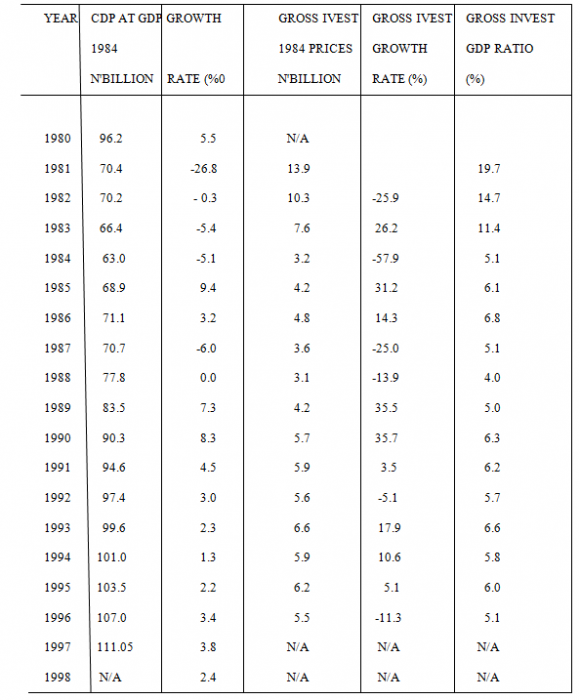
National development embraces all the activity sectors of the nation's economy ranging from Agriculture, crude petroleum and Gas, to repair services whose performance is measured by Gross Domestic product (see table 3 in Appendix A). This measures the total domestic and foreign value added created residents of a country, while the Gross National Product (GNP) per capital is the value for every individual in the country.
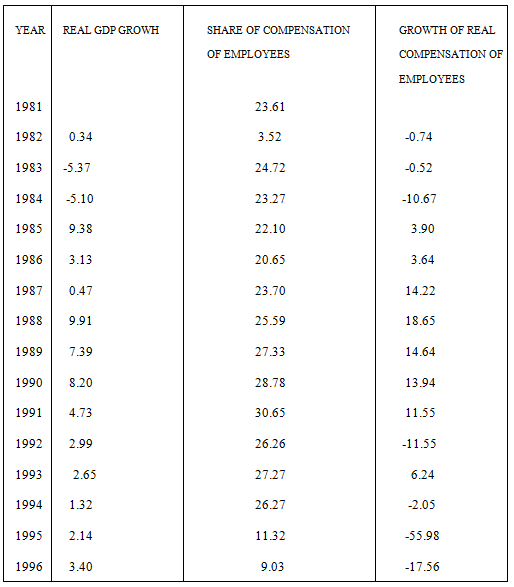
In terms of growth, there are indications that although total real GDP performed reasonably well in Nigeria since 1985, as shown in Table 5, this is unlikely to improve well-being of the average Nigerian especially the wage earners. Index D evidence at the macro level suggests that the average Nigerian wage earner became severely in pauperized in 1996.
According to empirical evidence, by the 1996 United Nations Human Resourses index, Nigeria ranked 137 th out of 173 countries with Cote D'lvorie, Zambia, Ghana and Kenya ahead of her in 1995.
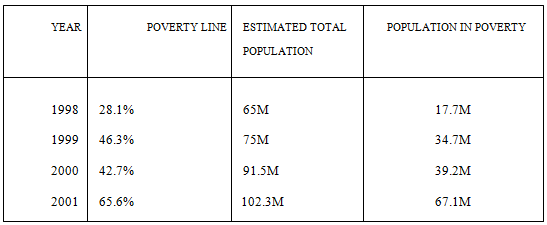
In any case, the domestic factors that may likely affect growth and development in the economy have been identified as. a) Realistic exchange rate. b) Balanced budget and small ratio of government contribution to GDP. c) Open trade policy as opposed to inward oriented, import substitution strategy and tariff regimes d) Political stability and good governance. e) Development of human capital/resources countries with skilled people grow faster. f) (Domestic resource. Mobilization-the benefits are enormous In all, national development or economic growth is recorded when a nationa's economy experiences increase in the GDP in the Economy. But this does not necessarily reflect in the welfare of the people especially where there is increased in the incidence of poverty as with in Nigeria between 1980 and 1996 (see Table 6 and 7) i
20. . The Place Of Tourism And Transportation In World Development
The global history of tourism development on a commercial basis can be traced to the invention of money as a medium of exchange in the middle ages and the development of modern modes of transportation which gave impetus to trade and travels Environmental Analysts, Tourism professional and Economist all over the world have recognized tourism as dependable foreign exchange earner and the world's largest jobs generator.
Economically, development and growth are dependent on a favorable balance of payment and trade; and tourism, a foreign exchange spinner, in an economic phenomenon in this respect. In Cairo, Egypt presence of large number of tourists annually made the government to upgrade the Cairo airport to international standards in the 1960s; and since then Cairo and Alexandria became cynosures of Tourism Organization show that Africa as a whole receives just two percent of all arrivals worldwide. This indicates that there should be a pan-African Campaign to significantly increase the figures with corresponding rise in foreign exchange earnings of development.
'No escape from transportation' is a valid transport fact from a study of economic history. This illustrates the crucial roles of transport in the sustenance and expansion of the ancient civilizations, in the circumnavigation of the globe and conquest of the world as well as in social, economic, political and military sphere of human life are too well-known to require detailed thesis within the time allocated for this study. In short the exploration and subsequent 'effective occupation' of the European Colonists in Africa, Asia and Americans were largely dependent on the development of water and land transportation, while rail transport boosted the industrial Revolution in Create Britain (1750 -1850).
Lord Lugard in 1922 asserted that 'the development of Africa can be summed up in one word -'transport'. Also in 1962 the stand ford Research institute of Canada commissioned to study the transportation system in Nigeria declared that the economic development of Nigeria is largely the story of opening of its vast area by Various forms of transportation resulting in the economic growth which in turn, Stimulated the demand for transportation (S. R. I. Report, 1961).
History has it that the transformation of Chile's transportation sector was one of the move that accelerated its becoming an exporter of grapes and other fruit to all parts of the world. The Chilean Government changed the regulation and allowed the private sector to operate the electricity were even liberalized before create Britain. Again, it is a known fact the spread of production trade and ideas are all dependent upon movement either by rail, road, water, telecommunication or pipes\tunnels. Its Contributions to the cross Domestic product.(see table 4) Finally it is said that transportation is the engine for positive development all over the world; while tourism would be a booming business if advantage is taken of transportation and communication facilities.
ii. Land Factor In Tourism And Transportation Land provides space and tenure for all human activities including tourism and transportation. For the purpose of this study land may be broadly defined as encompassing physical resources of land-reforms of various types, water bodies, climate, forests, wilderness and man-made landed properties of all factors of production required to meet the rising demand for tourism and transportation, there is no doubt that land is the most crucial without land, other factors of production ( Labour, capital and Etenrprenership) cannot be made to produce adequate facilities for tourism and transportation.
By their nature, tourist centers cum facilities including every form of leisure or recreation require extensive land areas. For example, the zoological gardens and wild life game. Reserve are major land consuming activities and they are in competition with other urban industrial and agricultural projects which have relatively high short term returns. The pressure of tourism on land in the urban areas and the country side piles up considerably whenever fast means of transportation is introduced and put in use. This is the mobility factor in tourism.
Nigeria as a country bestowed by nature, land features that will make physical infrastructure for tourism possible. A few examples are various types of landforms including waterfalls, coastal formations and water bodies, long sandy beaches network of Lagoons and creeks, extensive forest resources On the other hand, transportation is similarly in the world and so the available land must be planned for its effective dimension of 923,768 square kilometers, fairly well-watered, wholly in the tropic and of moderate relief. Within this dimension, the Nigerian airspace, coast lime and rivers are contained and all transportation system will have to operate within this limited space.
Recognizing that every form of movement needs a portion of land space to effect the actual movement set-off and return, planners of the transportation system of any nation cannot safely neglect the planning of land on which the system will depend. Land supply in its physical quality and quantity can constitute a key element and bottleneck in the planning, development and effective utilization of the transportation system in Nigeria. Yet land input aspect of transportation has been grossly neglected. Due to the neglect, death of data is encountered and this has let to frustration in executing some major transportation projects (Gandonu 1981).
On the whole, flourishing tourism and sustainable transportation system thrive on land -a crucial factor of production. And as such, our interest should be to have a balanced allocation of Nigeria's land resources to satisfy our tourism and transportation requirements without running into conflicts with other uses for the limited land. As the Nigerian land area is finite and population is exploding, we should be guided with the advice give to America when it was a nation of 25 million people by the Scottish essayist and the author of "The French Revolution" (1837), Thomas Carlye (1795-1881)-"(on won't have any trouble in your country as long as you have few people and much land, but when you have many people and little land, you r trials will begin" So we should not wait for the trials before we realize the importance of planning our land.
21. b) The Land Use Act
In his broadcast to the nation on the 29 th June, 1976, the Head of State and the Chairman of the supreme Military Council (SMC), General Olusegun Obasanjo (as he was then) enlightened the nation on the deliberations of the SMC regarding "Some basic and economic problems facing us". Among those problems highlighted were rent control and housing problem. Land Reform Commission was consequently set-up to examine the land tenure systems in the country and recommend steps to stream lime them and facilitate the acquisition of land for the construction of housing. The commission's report gave birth to the land use Decree (No.6) of 1978 (now Act) which came into force on 29 th March, 1978.
By virtue of section 274(5)(d) of the constitution of the Federal Republic of Nigeria, 1979 and amended, the land use Act has been entrenched into the constitution. And as such, it cannot ordinarily be amended or repealed, but in accordance with the provisions of section 9(2) of the constitution. Experts in the Landed profession felt that the action of the SMC is too radical to incorporate nationalization of land into the constitution of a country that operates capitalism. The NIESV position on this issue is that the Act should be expunged from the constitution to enable it be amended to meet the political, economic and social changes in the country. This had been made known to the past and current governments. It is an open secret and a common place for any person or corporate body that obtains land from the Governments to pay for the land twice. First to the original/former owners and/or the "Omo oniles" and thereafter the allocation fees to the Government. It is a must that they are settled before the allotee can take the physical possession of land. Yet, the Government closes it eyes to this false impression that all is well with the Act.
With the impediments of conflict of claims, operational machinery, definition of developed land and lack of manpower to foster speedy processing of applications, and the currency of the Federal governments policy on privatization and commercialisation of government parastatals and companies.
22. c) Land Acquisition
Land acquisition for whatever purpose, be it for tourism, transportation, agriculture, health or education, costs time and money. In any case, the public is usually receptive to transportation projects because they are seen as physical development avenues. A road is recognized everywhere as an important means of opening up or developing rural areas. Egerton as far back as in 1905 recognized the civilizing influence of roads when he said "Give me roads-good, broad and straight right through the jungle from one tribal area to the next-then we will be able to let in the light". However, land should not be taken with intent to deprive or punish the legitimate holders. At all times, there must be a clean motive in the location or routing of transportation projects.
Delays in compensatory claimant should be avoided. Otherwise individuals or communities may restrict future investors especially now that issue of reparations for the past years of cheating and neglect of communities are being echoed. The Niger Delta experience is fresh in our memories. Even every rural dweller and communities want to benefit from whatever resources that are available within their locality. For example, the Ife-Ibadan Road Dualization project started years back and enumeration exercises were carried out up till now, no compensation has been fully paid to the claimants whose properties/crops were affected.
Land matter may remain sensitive issue in Nigeria affairs, and as much government should give same urgent attention, at all times.
23. d) Tourist Attractions/Centres
Nigeria is abundantly blessed with a lot of sunshine, wide range of flora and fauna diverse multiracial culture, which offers tourist delight of a tropical holiday. Nigeria's attractions are varied, plentiful and evenly spread throughout the length and breath of all the local governments areas in the 36 states and Abuja
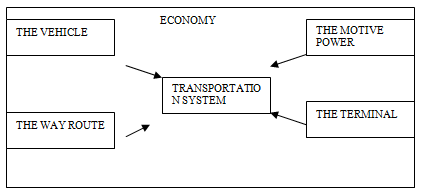
24. e) Transportation Systiem And Components As An Exposition To The Relationship Between Them And National Development
As mentioned earlier, transportation is very essential for development and growth of a state/Nation. However, many tend to ignore the modal attributes as well as the component. Characteristic inherent in transport.
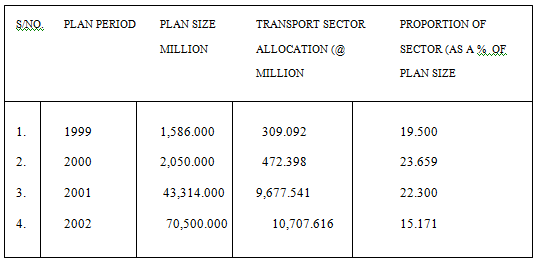
These omissions tend to shroud the potentialities of transportation and thereby undermines better appreciation of transportation to the society and human race. Without transportation, economic and social systems would simply grind to a halt (Faulks 1990) recognizing this vital role, successive governments in Nigeria either military or civilian, had and are still investing hundreds of millions of Naira in the transportation sector. Development plans, budgetary provisions for the transportation sectors were 19.5%, 23.7% 22.3% and 15.1%. More than $6billion was earmarked for transportation programmes, at the Federal level alone during 1998-2000 Rolling plan period. However, the importance of the transportation section to the Nigeria economy would be appreciated with the knowledge of its capital contribution to the Gross Domestic production 1996, 1997 and 1998, the current constant factor costs in percentage are 2.26, 2.52,and 2.93 respectively In any case, some of the contribution/roles of transportation in the sustainability of developing economy can be summarized as follows: i.
25. Historical Background of Ibadan
Ibadan was formed in 1821 a war camp but grew rapidly because of its position as a nodal between towns in the forest region and those in the grassland. Ibadan as a war town had political dominance over the surrounding towns. And the name IBADAN was carved out of "EBA ODAN" meaning beside Odan tree. And the arrival of the British colonial master in 1893 made the town a regional commercial centre.
There was railway extension in 1901 from Lagos to Ibadan due to the increase from Lagos to Ibadan due to the increase of Cocoa cultivation in the surrounding towns and villages of Ibadan. This made Ibadan an important centre for the collection of agricultural products from various parts of the country. This attracted many investors thus turning Ibadan into a commercial and industrial town.
Ibadan is presently the largest urban centre in Nigeria, thickly populated and with good amenities and facilities. Her potential market for industrial finished good contributed to the concentration of both commercial and industrial activities in the city.
26. II. The Geographical Location of Ibadan
Ibadan is the capital city of Oyo State. It is assumed to be the second largest city in Africa (Cairo being the largest in Africa). Ibadan covers an undulating area of about 452 m2 inhabited by about 1.829,187 people by census. Ibadan is situated south of the sahara Desert, about 137km from Lagos and lies between longitudes 3"47 and 3"59' East and Latitude 7"19' and 7"29' North of the Greenwich meridian. The city is about 235 meter above the sea level. The city has a fairly high uniform temperature, moderately, heavy seasonal rainfall, high relative humidity and intense cloud over.
The city is naturally drained by ogunpa, odoona, Kudeti and ogbere rivers. The city is connected to most important towns in the country by roads air routes and railway. Ibadan metropolis is made of Ibadan North local governments. Ibadan North East local government, Ibadan South East local government, which was formerly administered by the then Ibadan municipal Government.
27. III. The Population Study of Ibadan
The population of Ibadan increase due to the fulani wars and tsetse fly in the middle belt of Nigeria which lead to the movement of many people dawn from the Northern parts to southern parts of Nigeria. IV.
28. Ownership of Land in Ibadan
The ownership of land in Ibadan is loosely used. Sometimes it denotes absolute ownership while at other times, it is used in a context, which indicates that In actual fact, any customary right of ownership in Ibadan confers no right of property ownership on anybody but only of possession. A customary right of occupancy creates no estate in land, since estate implies an object of land ownership.
29. Table 3 : Ibadan Population Census and Projections
The customary land system has no fixed duration in the use of land for any member of the family. It only confers the right to treat and make use of land. But no member of the family has the right to treat and make use of land. But no member of the family has the right to dispose or alienate the family land as his personal estate. The family land is usually entrusted to the head of the family. The head of the family must not treat the land as his personal property or sell the land without the consultation of the principal members of the family.
Holding of land within the family is considered as the most precious inheritance from their fore fathers. Land is said to be held in trust for those dead, those still living and countless yet unborn. Selling out the family land amount to selling out their rights, their fore fathers rights and their children's right yet unborn. Selling of the family land arose later as a result of economic emancipation of the family.
In doing so, the family with several plots decides to sell part and share the proceeds among all the members of the family. Such transfer of the rights from the family to a proprietary right is usually subjected to conveyance law of Western Nigeria 1959 which was still applicable in Oyo State before the advent of land use act of 1978. If not sold, the land may be shared among many extended families. As a result, one can find a large extended family encroaching on a very small plot of land. Its highest and best use. Most of these families are very reluctant to give up their families Lands. Thus resulting in creating large slumping residential layouts in the city. Such as Agugu, Bere, Inalende, Kosodo, koloko and other such residential areas.
V. Ownership of Land under the Land use Act
The land use Act (No. 6 of 1978) came into operation on the 29th March 1978 and is still in operation in every state in Nigeria. The Act stimulates that the lands within each state shall be held in trust and administered by the state Governor of the state for the use and benefit of all Nigerians. All Urban lands shall be controlled and managed by the state Governor, while the local Government will have control and manage all lands in their areas of authority, which are not designated as urban lands. A land use and Allocation committee will be established in each state of the federation to advise the Governor on Land matters in Urban areas.
The committee will recommend to the state Governor on the issue of resettlement of people who loose their rights of company for publish purposes. Including the amount of compensation due to them. The member of this committee will be appointed by the state Governor but must include not les than two persons who qualify to serve in the public services, either as Estate surveyors or lands officers. These men must have been qualified for a period of five years. A legal practitioner shall also be a member, while the Governor shall appoint a member if the committee to serve as the chairman.
In the case of the non-Urban lands, there will be a land Allocation Advisory committee in each local Government of the country. The membership of this committee shall be appointed by the state Governor, after consultation with the local Government. This committee will advise the local Government on the management of Land in it's areas of authority in each of the local Governments. The land Tenure law in each state shall continue to have effect subject to the provision of the Decree. to demand rent, revise, at such intervals as stated in the certificates of occupancy. 4. The power is given to Governor to impose panel rent if any of the conditions of the certificates of occupancy which were not compiled with. Such conditions include failure to develop or effect improvement on the land allocated. However, if the Governor feels the holder cannot meet with the conditions of the certificate of occupancy due to special circumstances or may bring hardship on the holder, the Governor has the power to waive any or all the conditions. 5. When a statutory right of occupancy is granted by the Governor in respect of a piece of land, all exciting rights to use and the occupation of such land will end.
30. a) Principle of the Land
31. c) The Power Of The Local Government Under Land
Use Act 1. The Act empowers the local Governments to grant customary rights of occupancy to any person or organisation, for the use of land within their areas of authority, for agriculture residential or other purposes. 2. The lead Government has the power to grant customary right of occupancy for the use of land not exceeding 500 hectares for agriculture and 5,000 hectares for grazing of animals. Any grant above this shall be with the permission of the state Governor.
32. The Act empowers the local Government to occupy
and use, for public benefit, any land, within its areas of authority, provided that such land is not within the areas defined as urban. Also they may not use and occupy any land which is the subject of a statutory right of occupancy nor may enter any area compulsorily acquired by the federal or state Government. 4. The local Government has power to revoke any customary rights of occupancy on any land which it may enter and occupy for public benefits.
d
33. Development Process in Ibadan
To embark on any land development in Ibadan the approval of the local planning Authority must be obtained. The permission for the approval which must be in writing to be forwarded to the apprivate local planning Authority.
A development process that proceeds the approval may be demolished or the developed fined. The development order may be given to the developer within a short period, say two months, on compliance with the planning Authority request. Where the developer does not receive the development order, it is assumed that the permission has not been granted.
Appeal can be made to the director of planning in the local planning authority for re-consideration. In considering the application for permission, the planning Authority will pay particular attention to the following. 1. The building line: This is the nearness of the building to center of the road.
34. Density Control:
This is the number of living accommodation to be provided on the rating of the number of person per room. 3. Zoning: This stipulates the type of building that could be erected in a given area as stipulated in the action plan of the area. 4. Orientation: It is the placement of the building to the direction of the sun so as to have direct sunlight and much breeze.
35. VII. The Nature and Authority of Local Planning Authority
The local planning authority is an autonomous statutory organization established under the relevant Town and country planning law of each state. One of the law is the respect of the responsibilities of the planning Authority. These are: 1. The local planning schemes for its areas of jurisdiction and implement them in stages. 2. It also approve layout and building plans after careful scrutiny with due regard to the building byelaw and other zoning regulations. 3. The planning Authority is vested with legal power to see that the owners of landed properties conform to the building bye-law and other regulations so that the master plan is achieved. 4. The Authority exercises police in order to eradicate non-conforming to the planning rules and regulations.
36. If the owners of any development of land do not
comply with the requirements of the Town planning law, the planning Authority can stop it. 6. The planning Authority is empowered to receive any rate, money, property, loan, lease or other assistance for the furtherance of its planning scheme. 7. It is a criminal offence for any person to interfere with the duties and responsibilities of the planning Authority or to move any mark or notice erected on land by the Authority or to molest any employee of the planning Authority who is lawfully at his duty.
VIII.
37. Tourism and Trasportation in Ibadan
Tourism and transportation is made up of several locations operating in different part of the Ibadan metropolis and thus dealing with various types that is to say that separate market exists for every tourist centers and transportation companies involving different types of people patronizing them.
Tourism is Ibadan involves dealing with relaxation centers like recreation centers, hotels museum for the purpose of pleasure seeking people or those who love to take a time out for the leisure hours. While transportation in Ibadan dealing with all means of transportation people and good within and outside the metropolis. The common mode of transportation in the city are Road, Rail and Air which are operated by individual or private companies while the rail aspect of transportation is been operated solely by the government.
38. IX.
39. Tourism in Ibadan
Tourism in Ibadan as a source of National Development is seen as non contributive sector to the development in the sense that most of the tourist centers, Zoological garden in the metropolis are not been properly managed and do not attracts people again thereby causing loss on revenue generation to the government, due to non productivity of these centers workers are relieved of their jobs. a) Tourist Centres In Ibadan.
i. Bower's tower at Oke Aree ii. The zoological garden university of Ibadan.
iii. Agodi Garden iv. National museum Aleshiloye . v. Trans Amusement park Agbowo. Looking at the above listed places with the metropolis of Ibadan, information gathered shows that only the center that is been managed by consultant are performing be and no individual try to go into investing into the tourism sector as it is not well known to be a source that add to the National development. Taking Lagos State for example a lot of individuals, companies not to talk about the contribution in the tourism sector which is been visited from all round the globe.
40. b) Transportation In Ibadan
Transportation in Ibadan is operated by both the private and public in the metropolis, and only two mode of transportation are available within the metropolis and they are (1) Road (ii) Air, the third can only be referred to as occasionally means of transportation and this is the railway.
41. X.
42. Road Transportation in Ibadan
Metropolis is one of the fast going investment that contribute to the National development of both the government and to private investors, and their are different trypes of raod investment like private: i. Wewe motors ii. G.H.S motors iii. The National union of Road transport worker iv. Individuals v. Co-operative societies State Government (i) Transcity transport company Local Government:
Ibadan south west local government mass transit.
Among other are those put to operation by cooperative societies and individuals. This provides a lot of revenue to both the local and state government in the sense that annually they have a specific amount been paid to the government as there registration fees or permit as it is called.
The other side of transportation is the air transportation, this is just growing into a big time system within the metropolis and this cost people a lot of money to invest on though we have group of people coming together get to bring to existence one or more aircraft, for example: Kabo airline, ADC airline among others these airline makes use of the Ibadan international airport Alakija by the so doing so they pay a certain amount of money to the management of the airport and those ad to the income generated as a means of national development.
43. Chapter Four
I.
44. Data Analysis and Discussion of Finding a) Data Anlaysis And Presentation i. Tourism
The opinion of each of the problem that can cause the non-investment in the area of tourism and transportation were analysed after the interviews carried out. The analysis was based on the number and percentage difference in the opinion expressed per total number of sample. The analysis is based on the tables explained Table 1 at the appendix.
The numbers of people or household number is who have visited tourist Attraction centres in the last 6 months by purpose of visit and gender 1999/2002
The above table shows that not majority of every household visit the tourist centres or knows the purpose of the centre. For instance only 7.22% of both sexes (female and male) visit the centres for business purpose while 30.28% visits for leisure only.
And the percentage of the household who has visited a particular household (i.e museum, Zoo are shown in table 2.
The above table shows that most households were interested in festivals than any other centres.
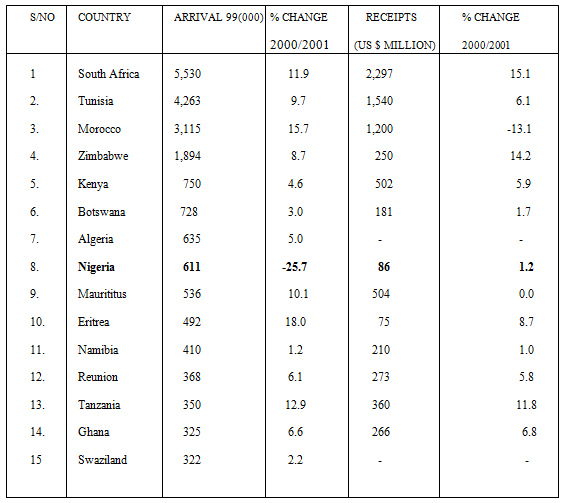
45. While table 3 shows the African tourist market as at year 2001
This table shows that Nigeria is place in the 8th position meaning that we are not productive in the area of tourism and with the above table we know that tourism aspect is not producing as it should be a contributive factor to the National development.
ii. Transportation The opinion gathered shows that transportation contributes greatly to the National development.
46. II.
47. Discussion of Findings a) General Ecomomic Crunch
It has been observed clearly that what brought the depressed economy of Nigeria is the debt problem and high inflation rate. Depression is characterized by heavy unemployment and low consumer demand relative to the existing production capacity of various industries.
By 1996, the quantity and price of crude oil that Nigeria exported fell from two million barrels a day at #9 per barrel oil being the country's major foreign exchange earner, government introduced austerity measure. An immediate effect was retrenchment in the public sector followed by the private sectors as there is no other means that we accrued more foreign exchange, and since the tourism and transportation sectors that failed to be recognised by both the government and private investor to boost the economy of the nation, and consumer demand has reduced because of decline in real incomes resulting from increasing unemployment and declining profit coupled with virulent inflation. In dicative statistics are provided by government in its budget review, gross domestic product (GDP) fell from a growth rate of 4.2%
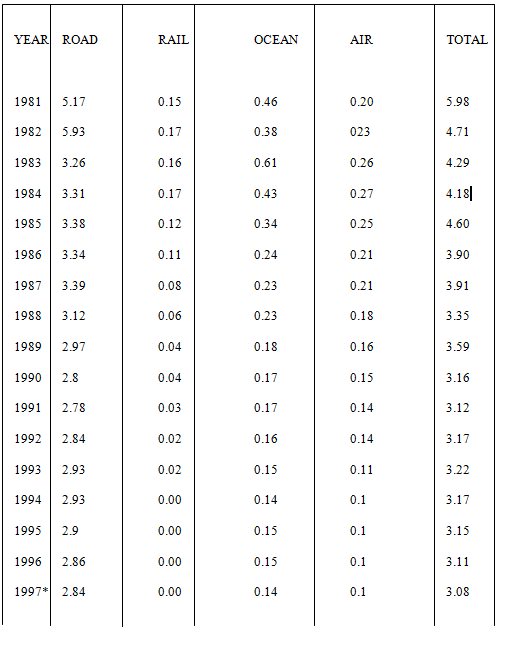
And from data's collected this show the rate at which the poverty level rises i the country. The table below shows that percentage of transportation. Looking at the table it shows how both the public and private investors has contributed to the National Development through their investment in transportation. Transportation has been taken for granted in Nigeria and the sector is overheating because of catalogue of problems. For the present situation of the industry. Can you imagine that Ibadan, a remit modern capital city has no rail head positive results may be achieved this time around in view of the input being made by relevant professionals. Some of the problems include a) Conspicuous absence of a proper co-coordinating Agency for transportation matters arising from poor institutional arrangement for transportation administration. Poor inter modal relationship or general absence of co-ordination among various modes of urban and rural transportation. The nation's transportation system can be described as highly isolatory and competitive rather than promontory complementary service. This situation accelerates the cost of transportation infrastructural provisions and maintenance. b) Complete negation of physical planning regulations which makes it difficult to integrate urban and rural transportation effectively to various land uses in the country. c) Bad governance and managerial incompetence appointment of incompetent people to manage transport concerns/undertakings. This affects transport contribution to the National economy.
48. G. Inadequate provision
49. b) Prospect of Tourism and Transpotation
This discussion of tourism and transportation in a depressed economy particularly in Ibadan metropolis and Nigeria in general id dwindling at an alarming rate and regarded irrelevant digression.
And in view of this, the prospect of tourism and transportation industry cannot be over emphasized.
The following under mentioned point is the existing features of the sector in a depressed economy like ours. And discussed below are some of the prospect/roles of tourism and transportation in the sustainability of developing country/economy. i. Without transportation, economic and social system would simply grind to a halt (Faulks 1990) Recognizing this vital role, successive governments in Nigeria either military or civilian, had and are still investing hundreds of million of Naira in the transportation sector, for example, as shown in Table 4, out of the total public sector capital outlay during the 1972-1978, 1980 -1984, 1985 -1990 and 1991 -1995. Development plans, budgetary provisions for the transportation sectors 19.5%, 23.7%, 22.3% and 15.1%.
More than #6 billion was earmarked for transportation programmes, at the federal level alone during the 1994-1996 rolling plan period. However, the importance of the transportation sector to the Nigerian economy would appreciated with the knowledge of its capital contribution to the gross. Domestic product. In 1996, 1997, and 1998, the current constant factor cost in percentage, 2.26, 2.52 and 2.93 respectively.
In any case some of the prospects of transportation in the sustainability of developing economy can be summarized as follows:
i.
50. Summary of Finding Recommenddation and Conclusion a) Summary of Finding
A research work will be in complete if finding in the work are not brought to focus so that sufficient recommendation could be made on the basis of finding. During the course of the research work on this paper, quite a umber of observation and finding were made.
Tourism and transportation sectors contribute immensely to the economic development process of Nigeria. And as such, the sectors should be developed to foster and enhance the overall development in multidimensional aspects therefore, the strategies for a greatly improved, competitive and sustainable tourism and transportation sectors are as highlighted below: a) Finding-progammed find on a continuous basis b) Management-Not politicized, appointment based on merit, professional skill and hard work. Frequency in change of management to be discouraged to allow for consistency and continuity of progammes once initiated nothing under enterpreneural and investment spirit more than erratic government institutions and rapid government reversals. c) Plugging of revenue leakage: that is plugging leakages of revenuer through embezzlement of funds, fraudulent manipulation of tickets sales, way bills or ticket less travels etc. d) Cultivation for maintenance culture. e) Courtesy-Dealing with people (Tourists) not familiar with the environment required courtesy. f) Privatization of tourism and transportation concerns.
It is a viable option and one of the strategies for development.
It should be part of the macroeconomic policy. g) Putting in place conducive and enabling macroeconomic environment that would attract investors in the two sectors. h) Direct involvement of the private sector in the provision, running, finding, management and maintenance of transportation and tourism infrastructure and services as in Chile. i) Integration of transport development in the overall urban and rural development of the country. j) Government and their agencies should focus on transport and tourism policy matters, control and enforcement of rules and regulations.
k) Discouragement of over reliance on rails mode and development of other modes of transportation especially water and rail. l) Improved delivery of transport services and tourism infrastructure through the adoption of appropriate pricing system and cost recovering and exploitation of the available potentials for tourism and transportation development in consonant with government policies and guidelines.
m) Steaming up of rural-urban drift. n) government interference and adoption of measures that can ensure the sustainability of fall transportation and tourism related activitiesswerves, infrastructure, transportation equipment, food hotels etc. o) being purposed by the federal Government (Confirmed by the minister of state for transportation, Alhaji Bello Usman in a meeting with transported union officials in the office in Abuja in late 1999) The bank is to take care of the agencies in the transportation sector of teh economy. p) Proper co-ordination of all transportation modes including rural transportation infrastructure for regional integration purposes. q) Declaration of transportation sector of the economy as a "preferred sector" by the federal government being strategic to the functioning of the economy as in the tourism sector and religiously upholding the status so accorded the sectors. r) Improvement on the rate of national economic growth as well as effective increases in standards of living.
II.
51. Conclusion
In this paper, tourism has been identified as a dependable foreign exchange earner as well as the world's largest generator of jobs: while transportation is seen as developmental catalysts and engine in the development processes as it provides the means and linkages by which people, goods, and services, ideas etc are moved into space and time. There is no escape from it. With these, it then follows that the tourism and transportation sectors would ever remain vital components for the envisaged sustainable socioeconomic growth in the new millennium. Tourism cannot thrive without transportation and transportation no nation can achieve desired social, economic and politically goals. Therefore, its roles is undeniably great and tremendous. It is sage to say that there is positive relationship between tourism, transportation and national development.
In The words of president Jerry J. Rawlings (1994) "Caring and preservation of the environment is exotically linked to economic" growth. So we should care and preserve our multi-racial culture, heritage, historic monuments etc. and heed to the biblical injunction in the Books of Proverbs "Removes not the ancient landmark which thy fathers set" (Proverb 22:28).
The physical infrastructure and human resources development and critical in reshaping the economy in order to realize the vision of economic growth in the new millennium without trained and informed tourism and transportation planner, managers, and laboures even the best of most of the infrastructure cannot be well utilized for the benefit of all.
As every activities requires land space, land matter may remain sensitive issue in the Nigerian affairs but with heeding to the strategy put forward in respect of impingement of the land use Act, 1978 from the constitution for easy amendment to reflect the dynamics of societal indices, the sensitivity may as well be reduced to the barest minimum.
Finally, with democratic settings, in the country, there will be increases in the public and private investment. This is the confidence the investors needed in the resilience of Nigerian economy which hopefully would turn the prophesies of the local forecasters of gloom and doom into fluke. Concerted efforts must be made by all tourism and transportation stakeholders to ensure that measures and policies that tend to run down the sectors contributions to the nationals economy are avoided or eliminated.
52. III.
53. Recommendation
Being conscious of the roles/ contributions investments in tourism and transportation can play in the growth of national economy and seeing investment in both sectors as investments in the future of our economy (a window for vital investment and life wire of the economy respectively) the way forward are as summarized below:a) There must be real National e) There should be a well-tailored comprehensive transportation planning for the country as expanding economy requires a reliable, safe, comfortable, efficient and adequate transportation system for its sustenance. f) Nigerians should develop high premium on tourism because of its social, political and economic implications as well as cultivation of maintenance culture to preserve and prolong the life-span of tourism and transportation infrastructure. g) Privatization and commercialization of government parastatals and companies should be a must, and stoppage of discrimination against small scale operators/entrepreneurs and support of informal sector of the economy. The gains of deregulation (liberalization) of the economy is enormous. h) There must be conducive and enabling macroeconomic environment to attract investors to the two sectors tourism (Tourism and transportation) i) All Nigerians should embark on corporate prayer for political stability and lasting democracy that would usher in policy consistencies, strong infrastructural support, and discipline, and cry into god that " ......... affliction shall not rise up a second time" (Nahum 1:9(b)" Notably, political instability has been the bane of the growth and development of the nations economy. j) The government must tackle the stereotype and negative impressions of Nigerians by the outside world with tack and deft mannerism to re-awake investors confidence sapped over the years of bad governance and management of resources: and bring the down-turn economy to perpetual normalcy. k) We must evolve our own pattern of development for genuine development to take place consistent with our own cultural heritage and tradition development must start with the people and not with food and things: people's orientation, organization and discipline, for it to prosper on the scantiest basis of natural wealth. l) Adhoc or fire-fighting technique in developing the tourism and transportation in Nigeria should be discourage. Rather long term planning techniques should be devised and applied to avoid wastage of resources. m) The issues and suggestions put forward by the committee on vision 2010 should be thoroughly examined from a general perspective in order to privatize them to ensure effective implementation and attainment of desired results. n) Efforts must be made to sustain the gains made towards effective transportation of men and materials by being cautious of restricting the supply side means of policy of metro vehicles and reasonable level of petroleum subsidy require utmost consideration by the government current road rehabilitation must be sustained and extended to waterways and modernization of railways. The national and private airlines operators must be daveviable and competitive towards improved domestic national services. o) The Federal Government should vigorously pursue the policy objectives on tourism as enshrined in the Act No. 81 of 1997 in a bid to develop and promote tourism into an economically, socially and politically viable industry and made the zonal offices in Lagos, Calabar, Bauchi , Kano and Ibadan more functional.
Above all, the objectives includes: i. To increase inflow of foreign exchange through the promotion of international tourism ii. (Encourage even development of tourism based enterprises. iii. To accelerate rural-urban integration. iv. The foster socio-cultural unity among the various groups in the country through the promotion of domestic tourism. v. To promote and encourage active private sector participation. p) Mandate should be given to tourism sectors as a "preferred sectors" of the economy to be number two (s) foreign exchange earner after crude oil, for the industry to maintain steady expansion for this, markets interested in our products of heritage, culture and history should be identified to propel tourism industry to the forefront. q) Finally, surveyors should always be involved in the policy making in all spheres of the economy (tourism development and transportation inclusive) to enable them give professional advice to the government in the interest of the nation.

| S/NO |
| GROUP A | Ibadan South West Local Government. Ibadan South East Local |
| Government. | |
| GROUP B | Ibadan North East Local Government Ibadan North West Local |
| Government | |
| GROUP C | Ibadan North Local Government. |
| In 1952 Ibadan's population census was | ||
| 459,196 inhabitants. That of 1963 census was 627,399, | ||
| while 1972 estimated put Ibadan at 720,000. That of | ||
| 1976 projected estimate was 863,000 and that of 1979 | ||
| was 1,006,759. The 1991 census put the population in | ||
| Ibadan at 1.829,187. See the table below: | ||
| 1911 | Population Census | 175,000 |
| 1921 | projected Estimate | 238,075 |
| 1931 | Projected Estimate | 397,133 |
| 1952 | population Census | 459,196 |
| 1963 | population Census | 627,379 |
| 1972 | projected Estimate | 720,000 |
| 1976 | Projected Estimate | 863,000 |
| 1979 | Projected Estimate | 1006,759 |
| 1991 | population Census | 1829,187 |
| Source: National Population Census (NPC) | ||
| b) The Power of The State Governor Under Land Use |
| Act |
| 1. The Act empowers the state Governor to gnat |
| statutory rights of occupancy to any person for any |
| reason. |
| 2. It empowers the Governor to handle matters |
| concerning grievances in matters of rights of |
| occupancy such as right of way through another |
| person's land. |
| 3. The Governor has the power under the land use Act |
| 2. Statuary right of occupancy granted by the state |
| Governor must be for a definite period of time and |
| may contain terms between the holder and |
| Governor. |
| 3. The Act provides that any person who is granted a |
| statutory right of occupancy shall be issued a |
| certificate signed by the Governor if such person |
| applies to him. He has to pay any prescribed fee on |
| the certificate. |
| 4. If any person is issued a certificate of occupancy |
| refuses or neglects to accept and pay for it, without |
| any lawful reason he shall have his certificate |
| revoked by the state Governor. He shall also pay all |
| incidental expenses incurred on the issuance of the |
| certificate. |
| 5. The Act stipulates that the term and condition on a |
| certificate of occupancy shall be enforced against |
| the holder and all his successors if he has not |
| signed to indicate his acceptance. |
| 6. The state Governor or any public officer authorized |
| by him, is empowered by the Decree to enter and |
| inspect any land which enjoys any statutory right of |
| occupancy, at any reasonable time, and the |
| occupier is bond by the Act to permit such an |
| inspection. |
| 7. License shall be granted by the Governor to any |
| person remove or extract stone, gravel, clay sand or |
| any other materials, which may be needed for |
| building or manufacturing of building materials, as |
| 3. The Act provides that during the tenure of a rights of |
| occupancy, the holder has sole rights and absolute |
| possession of all improvements on the approval of |
| the state Governor to order to transfer, assign, or |
| mortgage any improvements on the land for which |
| he has a certificate of occupancy. |
| 4. The holder of certificate of occupancy is entitled to |
| compensation for the existing improvements on his |
| land if his interest is revoked by the state Governor |
| or the local Government for any public use |
| VI. |
| 1 | AGRCULTURE | 26.05 | 28.5 | 32.93 |
| 2. | LIVESTOCK | 3.22 | 3.46 | 3.91 |
| 3. | FORESTRY | 0.35 | 0.41 | 0.53 |
| 4. | FISHING | 1.1 | 1.28 | 1.61 |
| 5. | MINING AND QUARRYING | 43.68 | 38.97 | 28.03 |
| 5.1 | COAL | 0 | 0 | 0 |
| 5.2 | CRUDE PETROLEUM AND GAS | 43.59 | 38.87 | 27.9 |
| 5.3 | METAL ORE | 0 | 0 | 0 |
| 5.4 | QUARRYING AND OTHERS | 0.09 | 0.1 | 0.13 |
| 6. | MANUFACTURING | 4.84 | 5.08 | 5.38 |
| 6.1 | LARGE SCALE | 4.15 | 4.35 | 4.61 |
| 6.2 | SMALL SCALE | 0.69 | 0.73 | 0.77 |
| 7. | UTILITIES | 0.07 | 0.07 | 0.08 |
| 7.1 | ELECTRICITY | 0.04 | 0.04 | 0.05 |
| 7.2 | WATER | 0.03 | 0.03 | 0.03 |
| 8. | BUILDING AND CONSTRUCTION | 0.59 | 0.56 | 0.9 |
| 9. | TRANSPORT | 2.26 | 2.52 | 2.93 |
| 9.1 | ROAD | 2.21 | 2.46 | 2.86 |
| 9.2 | RAIL | 0 | 0 | 0 |
| 9.3 | OCEAN | 0.02 | 0.02 | 0.02 |
| 9.4 | AIR | 0.03 | 0.04 | 0.05 |
| 10. | COMMUNICATION | 0.03 | 0.03 | 0.04 |
| 10.1 | NITEL | 0.01 | 0.01 | 0.01 |
| 10.2 | NIPOST | 0.01 | 0.01 | 0.01 |
| 10.3 | RADIO AND TELEVISION | 0.01 | 0.01 | 0.01 |
| 11. | WHOLESALE AND RETAIL TRADE | 13.03 | 13.84 | 16.09 |
| 12. | HOTEL AND RESTAURANTS | 0.12 | 0.15 | 0.18 |
| YEAR | ROAD | RAIL | OCEAN | AIR | TOTAL |
| 1981 | 5.17 | 0.15 | 0.46 | 0.20 | 5.98 |
| 1982 | 5.93 | 0.17 | 0.38 | 0.23 | 4.71 |
| 1983 | 3.26 | 0.16 | 0.61 | 0.26 | 4.29 |
| 1984 | 3.31 | 0.17 | 0.43 | 0.27 | 4.18 |
| 1985 | 3.88 | 0.12 | 0.34 | 0.25 | 4.60 |
| 1986 | 3.34 | 0.11 | 0.24 | 0.21 | 3.90 |
| 1987 | 3.39 | 0.08 | 0.23 | 0.21 | 3.91 |
| 1988 | 3.12 | 0.06 | 0.23 | 0.18 | 3.59 |
| 1989 | 2.97 | 0.04 | 0.18 | 0.16 | 3.35 |
| 1990 | 2.8 | 0.04 | 0.17 | 0.15 | 3.16 |
| 1991 | 2.78 | 0.03 | 0.17 | 0.14 | 3.12 |
| 1992 | 2.84 | 0.02 | 0.16 | 0.14 | 3.17 |
| 1993 | 2.93 | 0.02 | 0.15 | 0.11 | 3.22 |
| 1994 | 2.93 | 0.00 | 0.14 | 0.1 | 3.17 |
| 1995 | 2.9 | 0.00 | 0.15 | 0.1 | 3.15 |
| 1996 | 2.86 | 0.00 | 0.15 | 0.1 | 3.11 |
| 1997* | 2.84 | 0.00 | 0.14 | 0.1 | 3.08 |
| Source: Federal Office of Statistics, Infoprmation Department | |||||
| Note: * Provisional | |||||
| 0.00 = Less than 0.01%. | |||||