1. Green Mobile Telecommunication: Assessment and Implementation A Consumer Perspective in Lebanon
Michel Zoghby ? , Nancy Kanbar ? & Atef Harb ? Abstract-Mobile telecommunications' sector is one of the fastest developing sectors in the world. Both high usage and demand gather to show how this sector is increasing especially with the energy resources it requires to operate. Mobile telecommunications has a direct effect on the environment related to the usage (users' behavior, network's interaction, power and energy saving, etc.). The main objectives of this research are to assess the consumers' awareness and willingness to pay in order to go green in mobile telecommunication, while measuring the attitudes, perceived behavioral control, and subjective norms that affect the consumers' intentions to go green in mobile telecommunications. The theory of planned behavior is used as the conceptual framework to assess the consumers' intention and behavior towards green telecommunication. A Questionnaire on the theory of planned behavior was built, translated and face to face self-administered interviews were environmentally friendly ones. Changing hardware is not enough, but software, features, and operations techniques as well must be changed. To let the equipment function for optimal operations (less power usage), the hardware is to be guided by well-designed software and features. In Lebanon, the increase of mobile telephone users was observed in mobile telecommunications. The need of going green in a sector covering a large number of people is crucial. The influence on the numerous usages of mobile services is affected by the strong support for the effects of motivation, attitude effect, pressure, and follow up, control users (Nysveen, Pedersen, & Thorbjornsen, 2005). For the purpose of going green in the mobile telecommunications arise different research focuses such as (a) environmental degradation due to mobile telecommunications, (b) consumers' awareness of environmental degradation (affecting users, non-users, operators, vendors, etc?), (c) the cost of going green in mobile telecommunications (while optimizing the cost of changing into green and using as much as possible the already implemented system), and (d) the willingness of the consumers to pay extra costs while saving different environmental degradations expenditures. Going green is not an easy task especially in mobile telecommunications. The main objectives of this study are: 1) to assess the Lebanese consumers' awareness of the environment and health effect of mobile telecommunication, 2) to examine consumers' willingness to pay to go green in mobile telecommunication systems, and 3) to study the influence of attitudes, perceived behavioral control, and subjective norms on the Lebanese consumers' intentions to go green in mobile telecommunications. The theory of planned behavior was the choice for this topic.
2. II.
3. Green Mobile Telecommunications & the Theory of Planned Behavior
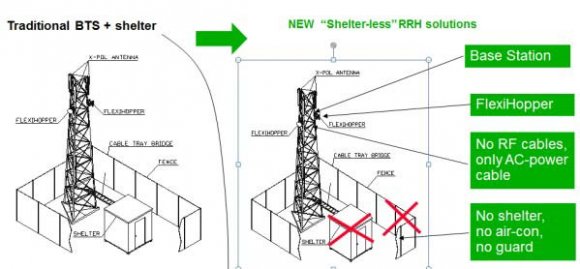
After what the world had faced of deteriorations in environment through noise, electric energy, pollution, and others, the idea of making a waste-free world started to take place (Annual Energy Review, 2010). People are likely to associate environmental problems with health quality in their surrounding (Wind, Van 1997). Awareness is a necessity: the reduction of time spent over the phone, the replacement of phone calls with SMS, and the internet applications will reduce and limit the exposure to radio waves (Stoner, 2011). Going green is not an easy task; it must include more than just consumers' awareness or willingness, but also mobile telecom companies' management and government's approvals since the sector is under the Ministry of Telecommunications' authority and governance (Shah, 2008). The effects of mobile telecommunications on the environment can be highlighted in the following: "Energy transfer to water molecules, leading to a temperature increase of the tissue" is the only mechanism of how the Electro-Magnetic Field (EMF) impacts health at small non-harmful measures, as per the International standards (Marino & Galloni, 2011, p 765). In the new green systems, there will be no shelters, no air conditioning, no guard fences, and no Radio Frequency cables that directly reflect in the new green systems: less equipment usage, lower power consumption, less maintenance, less installation time, and less cost. The next figure 1 gives an example of the new green system in Mobile Telecommunications. (Heikkila & Ojwaka, 2008). The theory of planned behavior has been used in many studies: to check weight loss behavior (Schifter & Ajzen, 1985), to check "college students' intentions to attend class and earn a good grade" (Ajzen & Madden, 1986, p22), to predict computer resource center usage by students (Taylor & Todd, 1995). Harrison and many others have demonstrated since 1997 that the behavior is directly proportional to intentions, attitudes, subjective norms, and consumer with a genuine interest in being 'green', for the sake of society and the wider environment, may also have a strong self-interest in being seen to be green" (Freestone & Mc Goldrick, 2008, p.447). In what relates to the application of Ajzen's model (theory of planned behavior), the study of the behavior takes into consideration the consumers' intentions to turn into environment friendly solutions (Von Andel & Voogd, 2011). Consumers having environmental awareness and experiences are more likely to use their environmental attitudes into behavioral decisions, including consumption and expenditure decisions to higher environmental concern: past behavior over the studied topic leads to more accurate data (Berger & Kanetkar, 1995). Sparks and Shepherd (1992) showed that the customers' behaviors are the main contributors in turning green and this was proven by identifying going green and by defining the behavioral intentions of going green. The usage of new environmentally friendly solutions in different sectors showed high efficiency in applying them with an increasing trend worldwide. International organizations are recommending green systems as the basis for new projects. Mobile telecommunications need many systems to operate; therefore, the necessity of green manufacturing became the concern of all factories leading the market. The government, public sector, telecom companies and individuals should all present individuals to set a list of rules, regulations, and life style guidance for all concerned parties in order to get the research work being adopted by the concerned parties in the most optimized way. In particular, this study focuses on the part related to the necessity of going green in mobile telecom and on the consumers' behaviors to go green in mobile telecom. As for the theory of planned behavior used in similar topics, it has proven its efficiency; especially when it comes to the intentions and behaviors of adopting new green systems. This model was adopted to be the framework of this topic of going green in mobile telecommunications.
4. III.
5. Methods and Procedures
Many variables contribute directly and/or indirectly to the theory of planned behavior. Our focus in this study is on three independent variables that measure attitudes, subjective norms, and perceived behavioral control, in addition to the dependent variable which is the User intention. Additional variables were taken into consideration including socio-demographic, awareness, environmental citizenship, etc. Starting with the attitude, it is explained in each individual's evaluation and self-application of the behavior: the level to which the behavior is positively or negatively valued (attitude towards the consequences of going green in mobile telecom). Second, the subjective norms are described by the individual's awareness of normative pressure or beliefs to performing a behavior. As for the perceived behavioral control, it is apparent as the ability of the individual to perform the behavior . All three combined together determine the behavioral intentions to adapt and adopt any new idea such as environmentally friendly mobile telecommunications .
In order to get more accurate results, data collection should cover more respondents, with more questions for each variable. In this case, the respondents were divided as it is described in table1.
6. Table 1 : Number of users per location area studied
The data collection performed through questionnaires is used for the purpose of getting specific details about the consumers' attitude, behavior, or awareness. The survey uses face-to-face selfadministered questionnaires, while the person questioning is always present to clarify the needed information for the respondents. The distinct number of users is first retrieved; then the weighted percentage for each location is done and number of users based on the weight percentage is calculated. At the end, the number of respondents questioned is calculated as 15% of the weighted number of users during one hour of peak traffic in each region.
In order to explain more the theory of planned behavior, several questions can be used to describe the variables: Is the consumer in favor of doing it (in going green in mobile telecommunications) ('this describes the attitude')? How much does the individual feel the social pressure to go green in mobile telecommunications) ('subjective norm')? Does the individual feel in control of the action in question (of going green in mobile telecommunications) ('perceived behavioral control')? (Francis, Eccles, Johnston, Walker, Grimshaw, Foy, Kaner, Smith, & Bonetti, 2004). People's behavior is affected by how much they trust their ability to perform it (Bandura, 1982(Bandura, , 1991)). In addition to what was mentioned in the theory of planned behavior manual, the divergence and focus on strategies to help people adopting healthy behaviors is a necessity (Francis et al., 2004). This study is present to assess the intention of Lebanese consumers to go green once the green mobile telecommunications is implemented. Intentions and perceived behavioral control should always remain unchangeable from the assessment till the observation . Actual control is reflected by the perceptions of the behavioral control. Different behaviors result from the behavioral predictions variations (directly related to the intentions and perceived behavioral control). When the complete control over behavioral performance is found, intention and perception of behavioral control are enough to predict the behavior . The mentioned variables influence both intentions and behavior biased towards attitude and normative influences where the perceived behavioral control is less accurate in the prediction of intentions (Armitage & Conner, 2001). The relation between the variables, especially behavior and control, is to be optimal while keeping the effect of perceived behavioral control as moderate in order to keep the result as fair, realistic and applicable (Armitage et al, 2001). In order to explain the variables, important and relevant beliefs are notable as follows: the behavioral beliefs affect the attitudes towards the behavior in question, the normative beliefs affect the subjective norms (social pressure to engage into a belief), and control beliefs affect the perception of behavioral control . The adopted theoretical model (theory of planned behavior) will attempt to answer the main research questions: Are the Lebanese consumers aware of the negative, environmental, and health effects of mobile telecommunications? Are the Lebanese consumers ready to pay higher mobile fees where green telecom systems will be applied in Lebanon? What is the influence of attitudes, perceived behavioral control, and subjective norms on explaining the Lebanese consumers' intentions to go green in mobile telecommunications?
In order to answer the research questions, primary data collection is a major important task, since there is lack of secondary data related to environmental attitudes and behavioral intentions in Lebanon (related to technology in particular mobile telecom). A questionnaire is developed based on the theory of attitudes, awareness, behavioral beliefs, behavioral intentions, control beliefs, demographic, environmental citizenship, evaluations, influences, motivation to comply, normative beliefs, perceived control, perceived power, subjective norms, and demographic variables of the respondents. Many of the questionnaire items are adopted by Harrison and others (1997) and modified to serve the present research. The data collection performed through questionnaires is used for the purpose of getting specific details about the consumers' attitude, behavior, or awareness. The questionnaire, composed of 20 questions, was adopted by Harrison et al. (1997). While questioning respondents, several factors were considered especially related to the mobile networks in Lebanon newly changed to 3G and LTE networks. Several questions are based on seven-point balanced Likert scales to have more detailed results. The survey uses face-to-face self-administered questionnaires, while the person questioning is always present to clarify the needed information for the respondents. The distinct number of users is first retrieved; then the weighted percentage for each location is done and number of users based on the weight percentage is calculated. At the end, the number of respondents questioned is calculated as 15% of the weighted number of users during one hour of peak traffic in each region. In this study, the variables stemming from the theory of planned behavior are the independent variables contributing to the prediction of the behavior. Those variables are attitudes, subjective norms, perceived behavioral control, demographic, structural, social, environmental citizenship, and awareness. As for the dependent variables, they can be summarized in the intention to going green in mobile telecommunications ). In the model chosen, each variable has been evaluated through corresponding items in the questionnaire that were answered by the respondents. Extra variables such as income, gender, and some socio-demographic questions were added in order to gather more information about the respondents.
IV.
7. Findings
In order to cover different kinds of data implications based on the theory of planned behavior, linear regression was performed. The variables are chosen as follow: the dependent variable (intention) and the independent variables, the mean scores for subjective norms, perceived behavioral control, and mean scores for attitudes. The significance level for this regression shows 0.000 as the significance for the F stats, and then, the model is significant at 99%. In addition, the R 2 value for this regression is 0.459 meaning that 45.9% of the data collected fits the regression line. This implies that 45.9 % of the future to be predicted by the chosen model. Considering the T-stats for each independent variable, the mean scores of attitude and subjective norms are significant to 99% (T-stats significance of 0.000). As for the perceived behavioral control, t-stats value of 0.174 express that there is low significance (around 83%) in describing the dependent variable. Perceived behavioral control depends on telecom companies' usage of environmentally friendly solutions. The low significance of the perceived control was impacted by the low certainty of the respondents' plans to adopt green mobile telecom when implemented. This regression shows that the mean scores of the independent variables (subjective norms and attitude) are significant and explain well the dependent variable: the intention. As a summary, and after the analysis, the significance level of the model reveals to be 99%, along with the most significant variable as the Attitude and the least significant variable as the Perceived Behavioral Control. Table 2 is an example of the respondent's willingness to pay to turn into green telecommunications.
Table 2 : Household income vs. willingness to pay
8. V. Conclusions and Recommendations
This research examines different factors that assess the intention of mobile telecommunications users of adopting green mobile telecom. Mobile telecom users were questioned in order to assess their awareness about the topic of going green in mobile telecommunications. Results show that about 60.1 % of the respondents consider that mobile telecommunications can have some effects on health degradation, while 73.8 % of the respondents are likely to consider that going green in mobile telecommunications will contribute in saving the environment. Respondents were asked if they were ready to pay an extra amount on their monthly mobile bill to move to environmentally friendly mobile telecom and the majority of the respondents (around 75%) are ready to do it. The theory of planned behavior applied to going green in mobile telecom showed good explanatory results gathering the various data (socio demographic variables, locations, mobile usage, etc.). are aware of the negative environmental and health effects of mobile telecommunications and they are ready to pay higher mobile fees where green telecom systems will be applied in Lebanon. Also, consumers' intention to go green in mobile telecommunications is affected by the attitude, perceived behavioral control, and subjective norms. Several limitations were confronted throughout the study and are summarized below: there is no sufficient data about going green in mobile telecommunication in what relates to consumers' behavior in Lebanon; by that, the respondents found this topic as new, and this might have affected the results.
The sample of respondents chosen was randomly selected from a population located in four different areas in Lebanon: Haret Hreik, Jdaide, Maameltein, and Roueiss. The four selected locations are highly populated and this is reflected in the high number of distinct mobile users as well as the high mobile phone usage. The survey was conducted by passing through the areas' population through weekends and weekdays, in order to cover distinct users with the variety of respondents and their locations that changes between weekends and weekdays. Different variables revealed in the questionnaire are studied; those variables are attitudes, awareness, environmental citizenship, perceived control, subjective norms, and socio-demographic factors. Furthermore, different additional factors can affect the intention of going green in mobile telecommunications. It is important to highlight that the study measures the intention of going green and not the behavior of the respondents; the behavior can't be measured until the green mobile telecom will be implemented. The telecommunications sector is directly related to the government where the decision to invest in any new technology is taken by the ministry of telecommunications. The government deals with the two mobile telecom companies who are just offering management of the sector. By that, the decision of going environmentally friendly requires the political will of the Lebanese council of ministers.
Mobile telecommunications has become a major contributor in our daily lives and a necessity for every person (for work, entertainment, etc.). The number of mobile phone users is increasing tremendously and this is a significant trend in Lebanon and in the world; even the networks are being adapted to handle smart phones (Alfa, 2012). This study that was applied in Lebanon can be adapted in any other country; this is technically feasible, since the Lebanese mobile network is one of the most complex networks with Lebanon's hard geography and diversified equipment, diversified users, and different behaviors, etc. Hence, standard organizations, etc.) and more specifically on the consumers (decision and policy makers). Their adaptation and lifestyles contribute in saving the environment through green solutions; hence the association between the business needs meeting international standards, consumers' behaviors, and technical requirements is attained. The role of the government, decision makers, mobile telecom companies, and employees in mobile telecom sector is important by having clear strategic plans to adopting green technologies in particular mobile telecom. In future studies, it is proposed to add other variables, such as previous experience in related sectors, outcome expectancy, and practical adaptation of going green.
Awareness campaigns are a necessity for decision makers in order to know the direct and indirect impact of not implementing such systems while showing that the consumers are ready to go green in mobile telecom. Attitudes, subjective norms, perceived behavioral control, willingness to pay to go green, awareness, and all socio-demographic variables affect the respondents' intention to go green in mobile telecom. The consumers' intention to go green has an effect on the mobile telecom sector. The study supports the national and international standards of mobile telecom, provides feedback to the decision makers for going green, and affects directly and/or indirectly different sectors (energy, power, etc.) helping in an environmentally friendly sector and country.