1.
Mattering as a mental model motivates employees through direct attention and conveyed importance. Mattering constructs become tangible in the use of an individual development plan (IDP). With employee input, the IDP fosters employee internal commitment, followed by manager Both stem from intentional discourse, mental models and behavior that is rooted in mattering. If successfully implemented, the end result is a simple, practical approach, which brings value and motivation to the individual, and supports the principles and goals of the organization. external commitment. feedback and follow through, which fosters
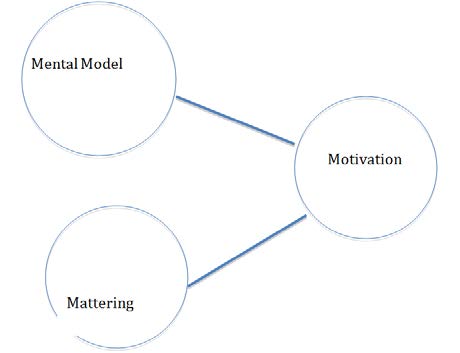
One view of human reasoning is that it depends on mental models. In this view, mental models are constructed from perception, imagination, or the comprehension of discourse (Johnson-Laird, 1983). And because organizations are nothing but people behaving in a structured framework to achieve certain goals, an organization must adopt a mental model, articulated with mattering constructs. This reflects a caring behavior towards motivating its employees (Figure 1). However, caring organizations must have the skills and tools to study its employees as individuals, groups and teams. What matters to one individual might not necessarily matter to another; organizations must consider the fundamental fact that people's perceptions and reactions to incentives or correction are different. Using Introduction rganizations pay tremendous amounts of money to screen, hire and train talent. However many business practices are missing the key factors for successfully retaining employees. Do companies really understand intrinsic versus extrinsic rewards and their importance to long-term retention? Even with an emphasis on money and benefits, the long-term retention factors go much deeper. This paper describes a shared mental model of employee mattering and the spoken and unspoken mix of organizational beliefs, attitudes and behavior that underlie the state of employee motivation and development. The complicated domain where managers and employees accomplish company objectives and support employee growth is shaded by missed organizational expectations, and unmet personal achievement. So what is necessary to motivate and retain quality workers? When managers intentionally establish mental models that stress employee mattering, organizations a) Mental Models: shared understanding Whether people openly acknowledge it or not, every work environment has a set of mental models. Influencing change starts with awareness of mental models --mental visions of created and shared understanding. "Mental models are deeply held internal images of how the world works, images that limit us to O familiar ways of thinking and acting. Very often, we are not consciously aware of our mental models or the effects they have on our behavior" (Senge, 1990). It's believed that organizational settings naturally progress through a series of mental models; achieving one simple goal model isn't typical.
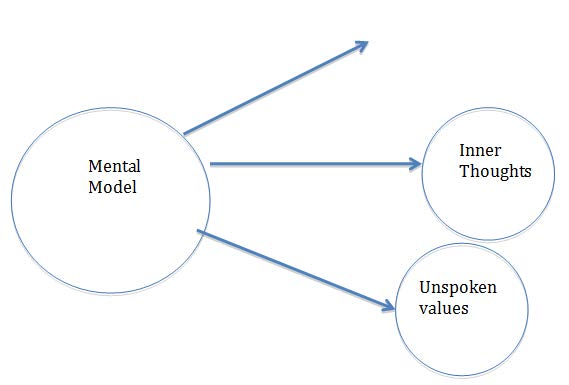
Mental models constitute perceptions of what is important (Figure 2). The models that employees and management share constitute underlying structures and group belief systems on which formal appraisals and company policy and procedures are based (Hill, 1995(Hill, & 2014)). These mental models are accompanied by emotional components, coupled with language, resulting in eventual efficiencies, where employees are deemed to be on the same informational page.
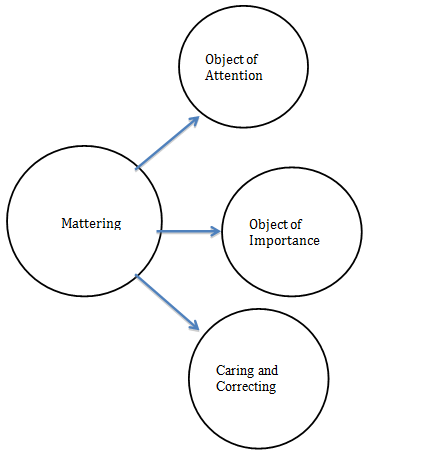
Unfortunately, organizations don't routinely offer development training to managers for mental models skills, either in change management or employee development. As organizations are challenged by largescale growth and complexity, a managers' competence in recognizing and using mental models for advanced change and learning skills management is crucial. "Opportunities to reflect, to experiment, to challenge and revise mental models...may be more important for learning in organizations than in [other arenas]?" (Senge & Sterman, 1990, p 1020). Managers and leaders must understand the simple but powerful effects from behaving as if employee's matter, establishing mental models rooted in conveyed significance. If these models are followed by clear development criteria, they support optimal individual and organizational results. Mattering is considered a reciprocal to significance. A person can feel significant due to things that they undertake and achieve; however "to matter" results from a person's perception that they have worth in the eyes of someone else. Perceptions of mattering followed when the research subject believed he or she was an object of someone's attention, an object of importance, or even of needing correction (Figure 3). Perceptions of mattering correlated to successful life behaviors. Accordingly, "To believe that the other person cares about what we want, think and do, or is concerned about our fate, is to matter." (p. 164). Since the original study, mattering has been studied within institutions of higher learning, or with individuals at the latter phase of life. Schlossberg (l997) determined that the extent to which one feels they matter to their organization and direct managers may contribute to employee productivity and work satisfaction. Connolly and Myers' research (2003) evaluated job satisfaction variance and the relationship to feelings of wellness and mattering. The research on mattering, managing and motivating employees, however, is scant. required tasks defined by the employee). According to Argyris, internal commitment equates to empowerment. The more that top management wants internal commitment from its employees, the more it must try to involve employees in defining work objectives, specifying how to achieve them, as well as creating a path for career growth. Aligning internal commitment with external commitment is an example of managerial and employee shared mental models. e) Mental Models + Mattering = Motivated Employee Employee performance reviews, and specifically individual development plans, are effective tools for a manager and employee to work together to create employee empowerment. It is important to connect employee performance reviews with individual development plans, alongside continuous feedback and coaching.
Even very simple individual development plans can be very effective. The basic but instrumental elements of this plan are: employees' professional goals and motivations; identified talents and strengths; and development opportunities. Through the creation of a development plan, internal and external commitment converges. This is the point where mattering as a mental model culminates explicitly for the employee and manager (Figure 4).
2. Conclusion
In conclusion, each employee must be empowered and shown that they matter through individual attention and feedback. Underlying the employee development plan is the meta-message of: specific attention, articulating that the employee is important, has the highest potential impact not only on employee performance, but also on the ability of the organization to meet its goals. As a consequence the manager, the employee and ultimately the organization share the same mental model: that employees matter and are instrumental to achieving success. In practice, employee motivation, mattering and mental models need to culminate in the act of a development plan. The manager and employee must meet face to face, discover goals and find the best way to achieve them. It is crucial that the manager allows the employee to verbalize their own goals; this is the best way to ensure they are completed. If individual goals match organizational goals, this is motivation and organizational performance at its peak. Lipman (2013) states that development planning does not have to be elaborate or costly. At it's core it is mostly a matter of good managers taking person-to-person time to understand their employees, to recognize their skills and needs. He further suggests that employees will respond if the organization takes a genuine interest in their future; the interest has to be sincere. Organizations often create values and mission statements in which employees play an important role, yet fail to act on the values stated. Managers create and briefly use pro-forma personal development plans that end up in file cabinets after being used for a month. If the written goals and plan are ignored, these actions are even less productive. Once employees realize that the care is not genuine, that in fact they really do not matter, it diminishes motivation and trust. When all the components come together and result in action, the values and vision are shared-the motivation is shared.
or internal (performance goals, desired behaviors and The individual development plan is efficient and effective. It starts with written goal setting, should include recognizing the employee's unique talents and strengths, followed by a plan for areas needing development. The manager ensures the written goals align with organizational initiatives. They then mutually develop the action steps and timeframe for completion. By focusing direct and specific attention, the manager articulates that the employee is significant and important to the organization. Via the individual development plan, internal and external commitment comes together. you matter. The manager, who focuses direct and