1. Introduction
overnment policies on entrepreneurship education are critical for ensuring that entrepreneurship is embedded into the formal education system, and offered through partnership with the private sector, the informal community, and apprentice training programmes (UNCTAD, 2010). Currently, the Ethiopian Higher Education Institutions give attention for enabling graduates to be self employed rather than seekers of job. To ensure this the course Entrepreneurship is given in almost all depart-ments of HEIs of Ethiopia. Entrepreneurship is an elusive concept. Hence, it is defined differently by different authors at different periods and depending on the level of economic development. According to Robert Ronstadt, 'Entrepreneurship is the dynamic process of creating incremental wealth'. This wealth created by individuals who assume the major risks in terms of equity, time and/or career commitments of providing value for some product or service. The product or service itself may or may not be new or unique but value must somehow be added by the entrepreneur by securing and allocating the necessary skills and resources. An Entrepreneur is a person who has the initiative, skill for innovation and who looks for high achievements and who creates his/her own job (Hailay Gebretinsae, 2007).
Entrepreneurial spirit in university graduates increases innovation, job creation, and competition in market place (Blanchflower and Oswald, 1998). Entrepreneurial skills are the most demanded ones, where today, governments and societies worldwide seek to introduce a range of different programs and encouragement to support entrepreneurship in university students (European Commission Report, 2008). The concern with entrepreneurship is thus a subset of employability, give that employability has been defined as 'A set of achievements, understandings and personal attributes that make individuals more likely to gain employment and be successful in their chosen occupations (Yorke, 2004). Personal desire is the primary element for creating one's own job and for successful achievement of one's own vision. That is why successful people advise us to discover that success measured by the size of our thinking. Let us then think and grow rich! To be rich does not come by chance but it is an individual's power of thought of direction and choice of action (Werotaw, 2010). A person chooses to set up a business as a consequence of a variety of reasons, and it is right to say that new businesses are usually the reflection of what their founders expected/desired. According to Werotaw (2010), 'If you think you can, you can. If you think you cannot, you cannot.' For every achievement, the first requirement is personal motivation to design vision. The motivational to succeed comes from the burning desire to achieve a purpose.
entrepreneurial desire. This is evident that the course entrepreneurship has positively influenced students' desire for self-employment and hence, self-employment intentions increased with taking the course entrepreneurship. Adama Science and Technology University has to work on entrepreneurial promotion by establishing club, arranging different seminars and workshops on entrepreneurship, start business plan competitions among graduates with attractive rewards for winners, giving training on entrepreneurship, facilitate means of experience sharing with famous entrepreneurs in the country, and any other means should be used in order to foster entrepreneurial spirit in the mind of graduates before graduation.
Napoleon Hill wrote 'Whatever the mind of man can conceive and believe the mind can achieve. A burning desire is the starting point of all achievement' (Shiv Khera, 2002).
Therefore, this study was conducted on assessment of higher education students' desire to create their own business (desire for being an entrepreneur) after their graduation and the contribution of the course entrepreneurship in creating desire of graduates for being self employed by taking students of Adama Science and Technology University in the case study.
2. II.
3. Statement of the Problem
Higher education institutions are coming under increasing pressure to ensure their graduates have relevant employability skills. Institutions are also being encouraged to help students develop enterprise skills so that more graduates have the confidence and knowledge to set up businesses. Senior managers and academics are looking for support at all levels to embed employability and enterprise into the higher education experience (Morelan, 2006). In order to increase the level of entrepreneurial initiative among students, it is essential to increase positive attitudes towards entrepreneurship, so attitudes can be viewed as the stepping stone to entrepreneurial intentions. Arguably, attitudes have a strong bearing on the way the students would look at entrepreneurship as a course requirement in HEIs education. A popular wisdom says that 'attitude determines altitude', which suggests that success or propensity to achieve targets or goals can be determined largely by the way people conceive positive thoughts about their ability to accomplish these targets or goals (Segumpan and Joanna, 2012). Many graduates of HEIs in Ethiopia today are also greatly under-employed. As the free labor movement (market) inaugurated and the expansion of governmental and private higher education institutions, the number of graduates increased at a speed faster than the rate of growth in the economy even university degrees ceased to guarantee automatic employment. The pace of economic and social development in the country is not fast enough to permit large number of Higher Education Institutions graduates to be immediately absorbed in to the job market (Asnake, 2010). Therefore, given the potential of self employment for Ethiopian economic development, it is the present strategy of the Ethiopian government inculcating entrepreneurship in higher education curriculum. The main reason behind the requirement of higher education to take entrepreneurship course is to encourage prospective graduates to create their own enterprise after graduation. One of the major outcomes of higher education is the preparation of graduates to participate fully in the world of work, higher education needs to recognize and take on broad more fully the significance and incidence of self-employment for the employability aspects of the higher education Curriculum (Morelan, 2006). But most of graduates have been observed while searching job in different organizations than creating their own enterprise (being entrepreneurs). If the students have positive attitude to entrepreneurship, they develop desire for being an entrepreneur. This is the main reason why this study geared on assessment of students' desire for being an entrepreneur.
4. III.
5. Objectives of the Study
The general objective of this study was to assess the desire of higher education students' to create their own business enterprise after their graduation. The specific objectives of this research were:
? To examine students' desire after graduation.
? In order to identify factors that influence the students' desire to becoming an entrepreneur. ? To investigate how entrepreneurship course could affect students' entrepreneurial intentions. ? In order to identify strategies to be used by Higher Education Institutions/ASTU in order to promote Entrepreneurship.
IV.
6. Methodology of the Study a) Data Type and Data Sources
For the achievement of the stated objectives, both qualitative and quantitative data were used. Respondents (under-graduates', prospective graduating class of 2011/2012 academic year) filled the questionnaires designed to achieve the objectives of the research. The relevant data were collected from both primary and secondary sources of data collection. Primary data were collected using: questionnaire and focused group discussion. Well designed questionnaire was prepared and filled by selected respondents/students at appropriate time for them and focused group discussion was conducted with purposively selected entrepreneurship course instructors. Secondary data were used from different sources such as manuals, various books, articles and journals, and websites from the Internet in order to strengthen the paper.
7. b) Target Population and Sampling Techniques
There are many higher education institutions in Ethiopia both governmentally and privately owned; but this study focused on Adama Science and Technology University that owned governmentally. In this University, there are students enrolled in seven schools and under different divisions such as regular, extension, summer. There are also different programs such as TVET, undergraduate, and post graduate programs, but this study used graduating class of 2011/2012 students enrolled in regular undergraduate of three schools. These are Schools of Business and Economics, Agriculture, and Engineering and Information Technology. In order to achieve the stated objectives, the researcher took the aforementioned schools and program as target population. Accordingly, the three schools selected were taken as strata. The total graduating students in each stratum is shown in the following table. The above table (table-1) summarizes target population of the study. The study took the sample size of 20% of the target population. The sample size was made proportionate to the size of each stratum. That means; proportionate stratified sampling was used. Hence, the total sample size was 263 graduating students (1315x20%). And sample size from each stratum was; 163, 60, and 40 from schools of Business and Economics, Agriculture, and Engineering and Information Technology respectively by using proportionate stratified sampling. Since the lists of all respondents were available from Enrollment and Examination Office, using systematic random sampling technique the respondents included in sample were selected.
8. c) Method of Data Analysis
After collecting the data using self administrated questionnaire and focused group discussion, it was analyzed descriptively and inferentially and SPSS was also used for questionnaire analysis. Finally, the summaries were presented in the form of tables, bar graph, ratio, frequency counts, and percentage and interpreted in line with the objectives of the study.
V.
9. Data Analysis, Interpretation and Findings a) Higher Education Students' Self Employment Desires after Graduation
This section describes higher education students' prospects concerning their future career options and their level of desire to be an entrepreneur after their graduation in relation with different variables. According to Veciana, Aponte, and Urbano (2005) identifying university students' perceptions of new venture desirability and feasibility is the first step to do something in awakening and stimulating students' interest in an entrepreneurial career. Table 2 depicts that whether higher education students have developed the intention (desire) to be an entrepreneur or not in their campus life. Accordingly, in each school majority of students were willing to be an entrepreneur (36.20% in SoBE, 40% in SoA, and 32.50% in SoEIT) replied as probably they could be an entrepreneur/business owner, and 46%, 41.67%, and 52.5% from SoBE, SoA, and SoEIT respectively revealed their wish as definitely they will be an entrepreneur and also there were students (SoBE(4.9%), SoA(5%), and SoEIT (2.5%) who replied as they have already started a business activities. This is consistent with Gemechis (2007) that revealed over 91% of the respondents claimed that they would like to start their own business.
According to Teixeira (2008), a high percentage of students also identify self-employment as a preferable career option as it involves a more interesting work and it is more prestigious than being an employee.
Instructors of Entrepreneurship course disclosed during FGD that even if students desire to create their own enterprise still the traditional thinking of 'education for employment' still exist in the mind of their students.
Figure 1: Readiness of Students' to be an entrepreneur (Percentage of students that agree and strongly agree with the statements)
Figure 1 revealed to what extent students agree or strongly agree with variables that indicate the level of students' readiness to be self employed. Accordingly, the above figure reveals that 84.80% of students thought that running their own business would be more prestigious than working for others. And 81.40% and 79.90% of students show their agreement about motivation of having their own enterprise after their graduation and preference to be self employed rather than work for others respectively. This all combined indicates that higher number of students in higher education (ASTU) have readiness for creating their own enterprise. This finding was compatible with what Llado's Josep (2009) found out 'the main reasons why people start a business has nothing to do with earning a lot of money, being famous or recognized, looking for adventure or improving the world but primarily because, for a variety of reasons, they do not want to carry on working for someone else. Besides, the above figure reveals the influence of family and other people suggestion in process of creating one's own job. Accordingly, 48.20% of students replied their agreement on positive thinking of their family if they pursue a career as an entrepreneur. But only 36.90% of them said that people suggestion influence their decision of creating an enterprise after their graduation. Traditionally, in Ethiopia families and other people expect graduates of higher education students to be employed in public or private enterprises rather than creating their own enterprise/ being an entrepreneur but the above data reveals that graduates witnessed that others' people suggestion were not influencing their intention. However, still the families of majority of graduates did not prefer for their children to be entrepreneur.
10. b) Factors Influencing Students' Entrepreneurial Desire
According to Global Entrepreneurship Monitor (2004), there are various reasons why young people decide to start a business, relating to their living circumstances, their personal attitudes, preferences and objectives and their particular interests and individual strengths. Recognizing these reasons is crucial for understanding and stimulating youth entrepreneurship.
Higher education students desire to become an entrepreneur is influenced by different factors. The figure below depicts percentage to which different factors have impact on entrepreneurial intentions. Majority of surveyed students (79.80%) reckon that accessibility of credit and personal skill of students have high and/or very high impact on creation of desire to be an entrepreneur, income prospects ranked third (76.80%) in influencing entrepreneurial intention of students'. According to Gemechis (2007) also access to finance (42%) of the respondents ranked it first, 20% of the respondents ranked it second and 38% of them ranked it third and beyond) as major inhibitor to starting up a business. According to, Blanchflower és Oswald (1998), one of the most important obstacles of own business start up is the limited amount of resources, mostly the lack of capital.
Social factors, family background, previous entrepreneurial experiences can influence the timing of start-up in the career of an individual (Carrolés Mosakowski, 1987).
The students also replied that government policy (74.90%), willingness to take risk (72.60%), availability of business idea (71.10%), self efficacy/effectiveness (70.70%) have either high or very high impact on entrepreneurial desire.
Below half percent of students (44.50%) only said their friend/s have either high or very high influence on their entrepreneurial intentions. Still the figure 4.3 reveals that being one's own boss, mass media, previous work experience, availability of job opportunity, role model, social and cultural value, and entrepreneurship course have either high or very high impact on entrepreneurial desire of students. According to Teixeira (2008), entrepreneurial intents are to examine personal traits such as risk taking, self effectiveness/creativity, and achievement motive (income prospects). From the above figure (figure 2), it is possible to conclude that almost all identified factors have an impact on creation of entrepreneurial desire in graduates' mind. Only role of friends was less than all other factors in its influence on entrepreneurial desire of graduates.
11. c) Contribution of the Course Entrepreneurship in Creating Entrepreneurial Intentions
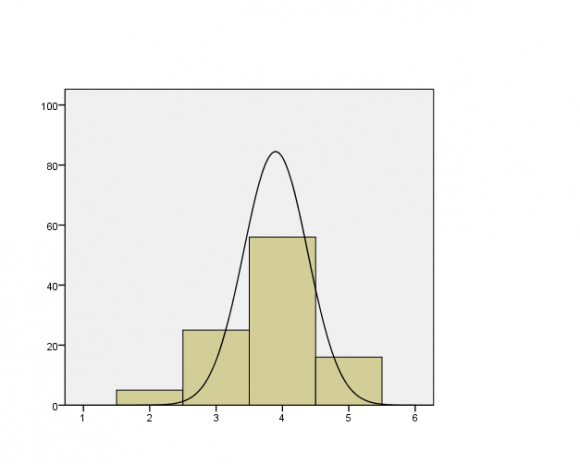
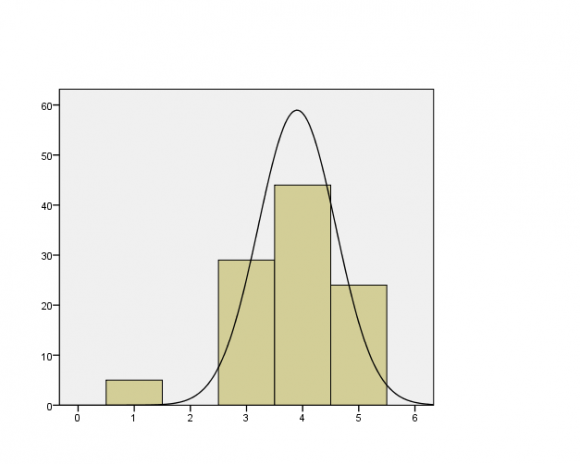
A broad definition of entrepreneurship education: «All activities aiming to foster entrepreneurial mindsets, attitudes and skills and covering a range of aspects such as idea generation, start-up, growth and innovation» (Fayolle, 2009). According to KAUFFMAN Entrepreneurship is a fundamental means by which a free society comes to know itself. Through the continual innovation, the ongoing transformation of ideas and enterprises, and the persistent testing this takes place in the market. According Today in higher education of Ethiopia, entrepreneurship has got recognition to be given in almost all fields of studies. Many departments inculcate entrepreneurship as a course in their curriculum. Therefore, in this section of the article the view of students on the importance of the course entrepreneurship given to them and the extent to which the course entrepreneurship influence their desire of being entrepreneur was discussed. The above figure (figure 3) depicts the impact of the course entrepreneurship in creating entrepreneurial intentions of students via their schools. As shown in the figure the curious result is that majority of respondents in School of Business and Economics (61.35%) and Agriculture (58.33%) reckon that the course entrepreneurship given to them increased their entrepreneurial intentions considerably. Similarly, majority of students in the School of Engineering and Information Technology (55%) reckon that entrepreneurship course given to them somewhat increase their entrepreneurial intentions. Whereas very few students replied as entrepreneurship course given to them has no effect (8.9% from all schools), decreased somewhat (0.60; SoBE), and decreased considerably (6.67% from SoBE and SoA). Generally, the result found proves that the course entrepreneurship given to graduates of higher education students' increase their entrepreneurial desire. This figure has Accordingly, most of the students agreed on the contribution of the course entrepreneurship in creating awareness (94.30%), creating knowledge (92.40%), creating attitude (81.70%), and enhance their skills (79.50%) to start up a business. The result also depicts that only 45% of students have identified idea on which they have created their business after their graduation and only 40% agreed as they have developed the skills of preparing business plan in the entrepreneurship course. From this result, it is possible to conclude that the Entrepreneurship course given to the students were theoretical focused than practical focused. The above figure indicated less than 50% agreed on business idea identification and business plan preparation in the course Entrepreneurship given to them. But these two factors really determine business start up as of many research findings. bridges between potential entrepreneurs and private business organizations, namely those acting as entrepreneurship support organizations, such as incubators, business angels, property rights offices, to name a few.
Fostering entrepreneurship among students has become an important topic in universities as well as in researches. As a number of studies show, student interest in entrepreneurship as a career choice is growing (Brenner et al., Fleming, 1994;Kolvereied, 1996) while interest in professional employment in businesses is declining (Kolvereid, 1996). Since many researchers have evaluated the importance of entrepreneurial competencies in connection with successful start-up and survival in business (Bird, 2002;Onstenk, 2003), for moving towards the entrepreneurial society it is imperative to have entrepreneurship competencies (Taken from, Hosseini S.M. and Mahtab P., 2010).In Ethiopia currently government give great attention for entrepreneurial development so as graduates of higher education institutions able to create their own enterprise after their graduation. Therefore, 0.00%20.00% 40.00% 60.00% 80.00% 100.00%
12. Global
13. VI. Conclusion and Recommendations a) Conclusion
A high percentage of students in the schools under study have desire/intention to become self employed/entrepreneur after their graduation. The result shows that 87.10%, 86.67%, and 87.50% from SoBE, SoA, and SoEIT students respectively have a positive attitude for creating an enterprise. The finding revealed that students' whose families have entrepreneurial background have higher entrepreneurial desire than those students whose families have no entrepreneurial background. Even if 84.80% of students believe that running their own business would be more prestigious than working for others, the majority of students' families did not prefer creating an enterprise for their children. Out of surveyed students only 48.20% agreed on the statement that says 'I believe that my family thinks that I should pursue career as an entrepreneur'.
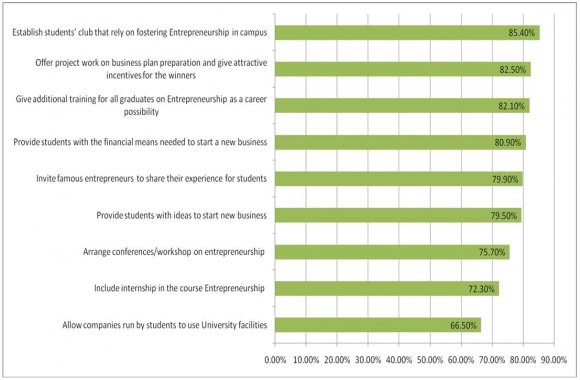
Higher education students' desire to become an entrepreneur is influenced by many factors. Among identified factors accessibility of credit and personal skill (79.80%) ranked first, followed by income prospectus (76.80%), and government policy (74.90%). But friends (44.5%), being one's own boss (51.40%), and mass media (54%) are ranked as less influential factors in entrepreneurial desire creation. In three of schools majority of the surveyed students was reckoning as entrepreneurship course was very important in their field of study. The result obtained proves that the course entrepreneurship given to graduates of higher education students increase their entrepreneurial desire and entrepreneurship education positively influences students' perceptions of self-employment and hence, self-employment intentions. The contribution of the course Entrepreneurship, which is given to the students, was relatively less in business idea identification (45%) and business plan preparation (40%) as students replied. However, instructors revealed that they gave project works such as business idea identification and business plan preparation. Over 80% of the surveyed students recognized the fact that their desire in new venture creation would be improved more if their institution/ASTU establish students' club that rely on fostering entrepreneurship in campus (85.40%), offer project work on business plan preparation and give attractive incentives for the winners (82.50%), give additional training for all graduates on entrepreneurship (82.10%), and provide students with the financial means needed to start a new business venture (80.90%). But only 66.50% of the surveyed students replied as allow companies run by students to use University facilities improve their entrepreneurial desire. The FGD result disclosed that the higher education institutions/ASTU should create linkage with industry and if venture capitalist created with students and industry, students gain more knowledge of entrepreneurship practical.
14. b) Recommendations
In light of the findings, the following recommendations were drawn: 3. It was found that majority of students had desire to be an entrepreneur and they knew as selfemployment/being an entrepreneur is career possibility for graduates of higher education institutions. Therefore, stakeholders should help graduates so that they are able to convert their desire into practices. 4. Participation in business plan competitions is more prevalent today than before. Student competitions have become very important, offering incentives in the form of reward and often the opportunity for students to get financing for their plans. Therefore, the University should prepare a program at end of each academic calendar on which students compete on preparation of business plan that is viable and winners should given attractive incentives either in monetary or no-monetary terms so that they enable doing business.
15. Many universities now have entrepreneurship clubs
or associations for students. These campus-based clubs arrange speakers, round table discussions and provide opportunities for peer learning. And the finding of this research also revealed that establishment of Entrepreneurship club in the campus was among top factor that enables to foster entrepreneurial spirit. Therefore, the University/ASTU should initiate and encourage establishment of 'Entrepreneurship Club' that prepares different programs, workshops, conferences that promote entrepreneurship in campus and that enable students' to create the desire of being an entrepreneur after their graduation.

| S/No | Schools | Number of Students |
| 1 | School of Business and Economics(SoBE) | 816 |
| 2 | School of Agriculture (SoA) | 298 |
| 3 | School of Engineering and IT (SoEIT) | 201 |
| Total | 1315 | |
| Source: Adama Science and Technology University Enrollment and Examination Office, 2011/2012 | ||
| Item | Alternatives | Fr | SoBE | School of Respondents SoA % Fr % Fr | SoEIT % | Fr | Total | % | ||||
| I will definitely not | 17 | 10.4 | 2 | 3.33 | 3 | 7.5 | 22 | 8.37 | ||||
| Will you start your own business after your graduation? | I thought of that before, but have given up now Probable I will in the future Definitely I will in the future | 4 59 75 | 2.5 36.2 46.0 | 6 24 25 | 10 40 41.67 | 2 13 21 | 5.0 32.5 52.5 | 12 96 121 | 4.56 36.51 46.00 | |||
| I have already started a business | 8 | 4.9 | 3 | 5 | 1 | 2.5 | 12 | 4.56 | ||||
| Total | 163 | 100 | 60 | 100 | 40 | 100 | 263 | 100 | ||||
| Source: Author's Survey, 2012 | ||||||||||||
| expanding | the | activities | of | fostering |
| entrepreneurship to all schools. | ||||